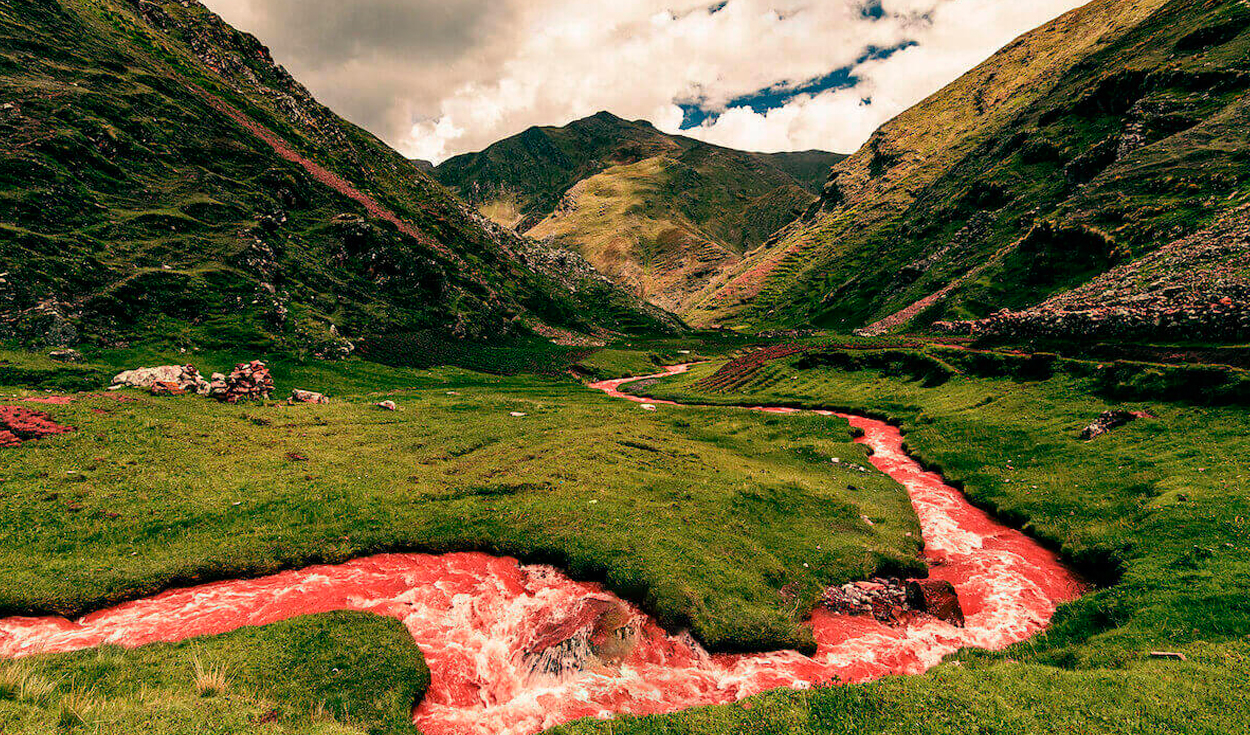
The Red River in the Cusco Region.
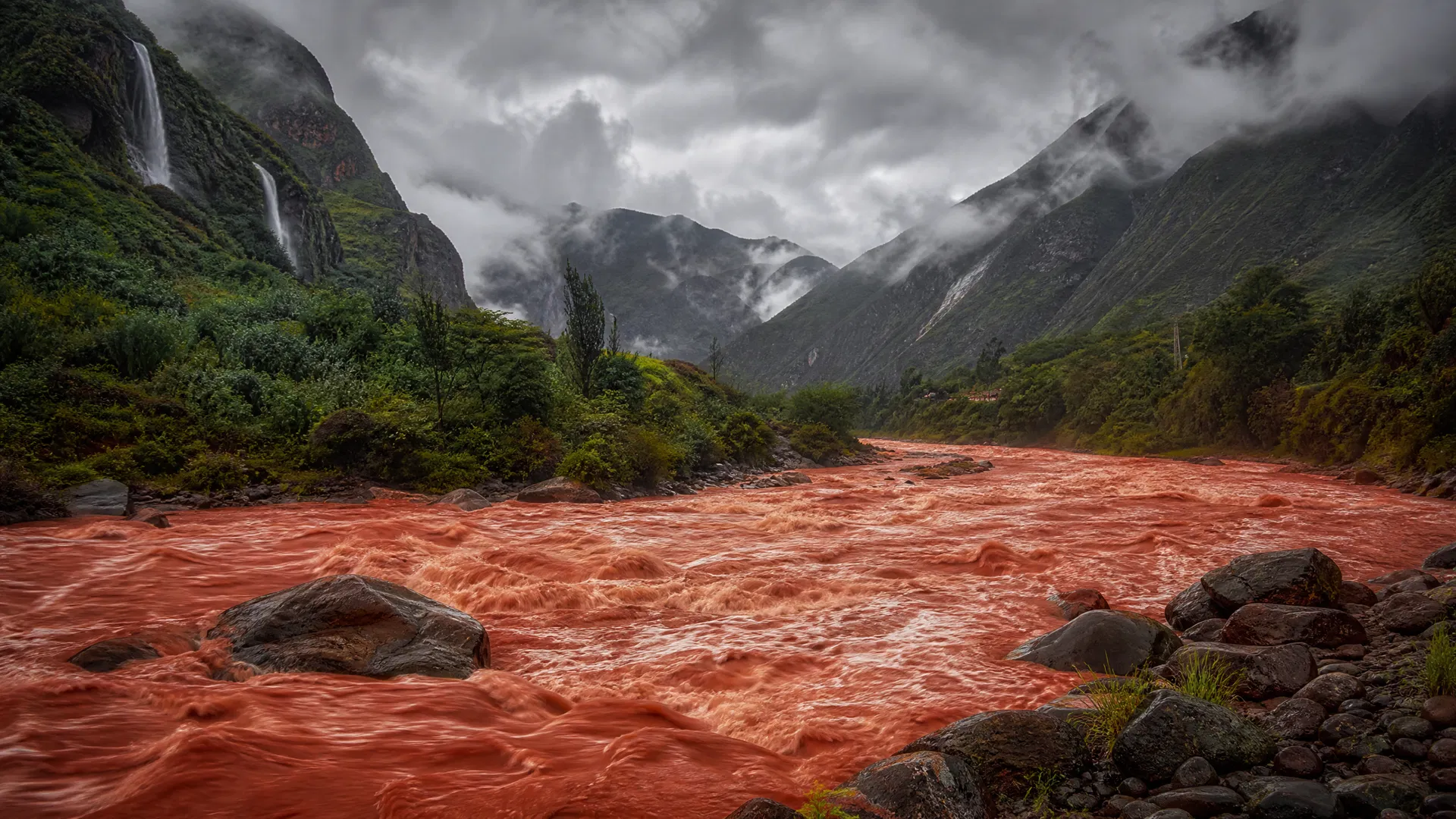
The Red River in the Cusco region is commonly known as the Palccoyo Red River or Yawar Mayu (“River of Blood” in Quechua). It is a natural river that turns reddish due to the high concentration of mineral-rich sediments carried from the surrounding mountains during the rainy season.
The red River Geographic Location.
The Red River is located in the province of Canchis, district of Pitumarca, in the Vilcanota Mountain Range. It is situated approximately 100 kilometers southeast of the city of Cusco.
The town of Pitumarca, where the hike to the river begins, is located at 3,570 meters above sea level. From there, a 2- to 3-hour hike is required to reach the river, depending on the visitor’s physical ability.
- Province: Canchis
- District: Pitumarca
- Distance from Cusco:
- Approximately 100 km
The river is located near the community of Palccoyo Rainbow Mountain, in the province of Canchis, south of Cusco. It is often visited together with the Palccoyo Rainbow Mountain circuit.
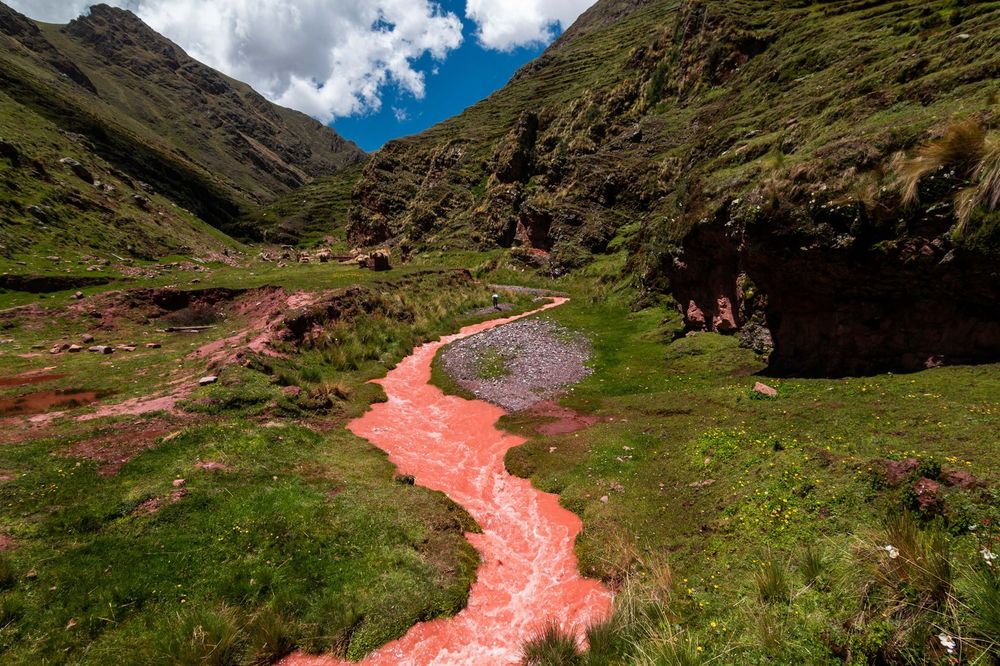
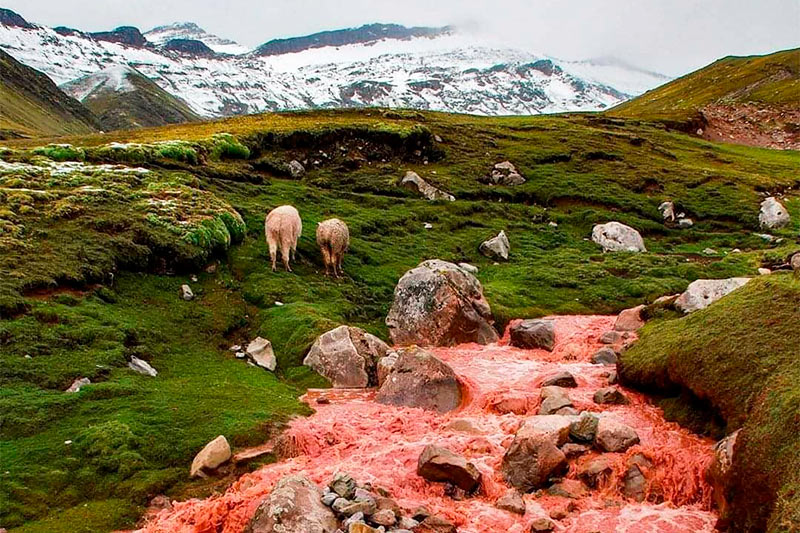
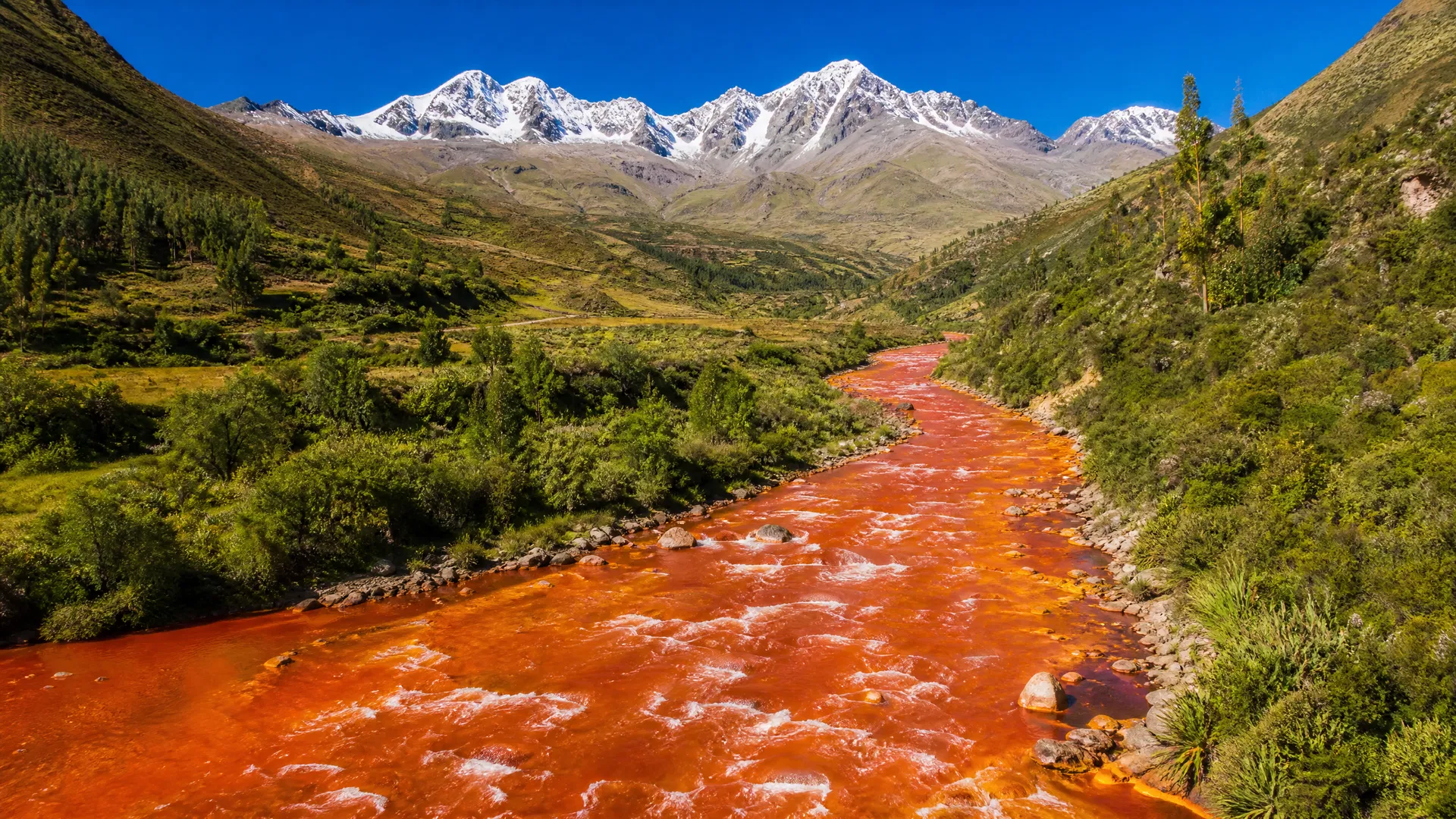
Why is the river Red ?
The reddish color is caused by:
- Iron-rich minerals in the soil
- Red clay and sediment washed down from the mountains
- Rainwater erosion during the wet season
The effect becomes stronger between December and April, when rainfall increases the flow of mineral sediments into the river.
Geological Phenomenon
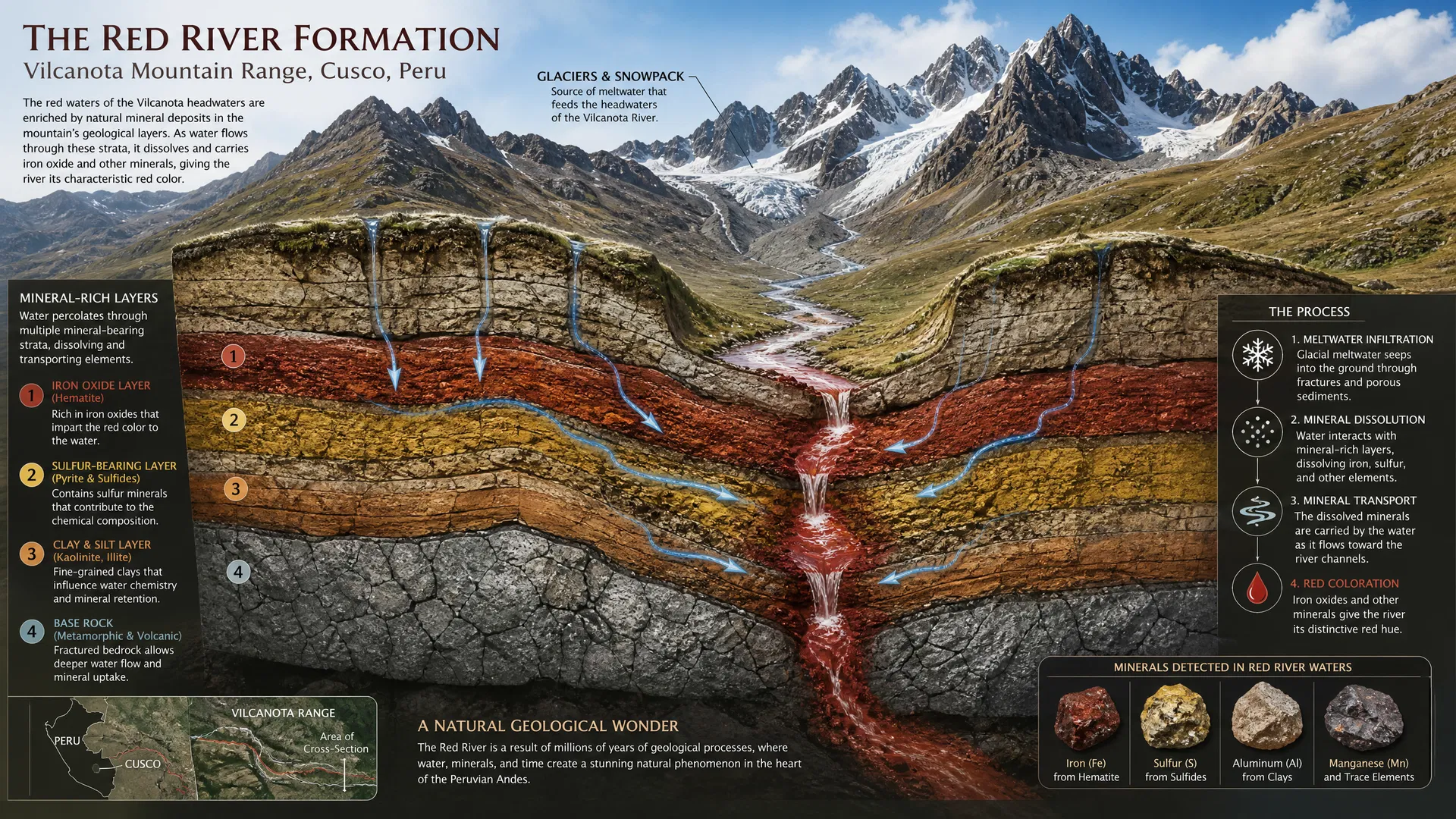
The red color of the Río Rojo is not permanent, but a seasonal phenomenon caused by the erosion of minerals in the surrounding mountains. During the rainy season, the water carries sediments rich in iron oxide from the hillsides.
The main minerals responsible for the color are iron (Fe), sulfur (S), aluminum (Al), and manganese (Mn). These elements dissolve in the water as it flows through the geological layers, creating the unique visual spectacle that characterizes the river.
- Iron Oxide (Hematite)
- Primarily responsible for the river’s intense red color.
- Sulfides (Pyrite and Sulfides)
- Contribute to the mineral composition and color.
- Clays and Argillites
- Formed millions of years ago, they enrich the sediment.
Best time to visit the red River.
- Rainy season (Dec–Apr): strongest red color
- Dry season (May–Oct): river may appear lighter or more brownish
Altitude
The area is located at approximately 4,700–5,000 meters (15,400–16,400 ft) above sea level, so visitors should acclimatize in Cusco before visiting.
How to get there
Most travelers:
- Depart from Cusco by car or tour
- Travel about 3–4 hours toward Palccoyo
- Take a short hike to viewpoints of the rainbow mountains and the red river
What makes it special?
Unlike many rivers colored by pollution, this river’s color is a natural geological phenomenon. The landscape combines:
- Red rivers
- Multicolored mountains
- High Andean valleys
- Snow-capped peaks
The Red River, known locally in Quechua as Yawar Mayu (Blood River), is a striking seasonal phenomenon located in the Vilcanota mountain range of the Cusco region, approximately 100 kilometers southeast of Cusco city.
The Science Behind the Color
The river’s vivid red or ocher hue is not permanent; it is a result of specific geological and climatic conditions:
- Mineral Composition: The surrounding mountains are rich in minerals, particularly iron oxides, red clays, and argillites.
- Seasonal Erosion: During the rainy season, heavy downpours wash these minerals and sediments from the mountain slopes into the riverbed.
- Chemical Interaction: As the water mixes with these iron-rich sediments, it takes on a deep red color, creating a stark contrast against the green Andean valleys.
When to Visit the red River.
The Red River is a seasonal attraction. To see the water in its famous red state, timing is critical:
- Peak Season: January, February, and March are the best months, as rainfall is most frequent and intense.
- Shoulder Months: November, December, and April may offer glimpses of the color depending on the weather.
- Dry Season (May to October): During these months, the river returns to a clear or brownish hue, as there is not enough rain to wash the minerals into the current.
Location and Accessibility
The river is situated in the Canchis Province, near the town of Pitumarca. It is often visited in conjunction with the Red Valley (Valle Rojo) or the Palcoyo Rainbow Mountains.
- Route: Most travelers take transport from Cusco to the town of Checacupe, then continue to Pitumarca. From there, a hike of 2 to 3 hours is typically required to reach the best viewpoints of the river.
- Altitude: The area sits at over 4,000 meters (13,120 feet) above sea level. Proper acclimatization is essential before attempting the trek.
The red River – Travel Tips.
- Gear: Because the best viewing time coincides with the peak of the rainy season, waterproof trekking boots and a high-quality rain poncho are mandatory, Bring waterproof clothing, hiking boots, sunscreen, water, and snacks. During the rainy season, a poncho is essential. Bring a camera to capture the beauty of the landscape.
- Photography: The color is most vibrant on overcast days or immediately after a heavy rain, as the sediment load is highest.
- Conservation: The river is a vital water source for local communities and livestock. Visitors are encouraged to stick to established paths and avoid leaving any waste in the sensitive alpine ecosystem.
- Physical Preparation: The 2-3 hour hike requires a good level of fitness. The altitude (3,570-4,300 m) may affect some visitors. Acclimatizing in Cusco before visiting is recommended.
- Environmental Care: Respect the environment. Do not pollute the river; take your trash with you. The river’s waters are vital to the local communities. Be responsible for this unique ecosystem.
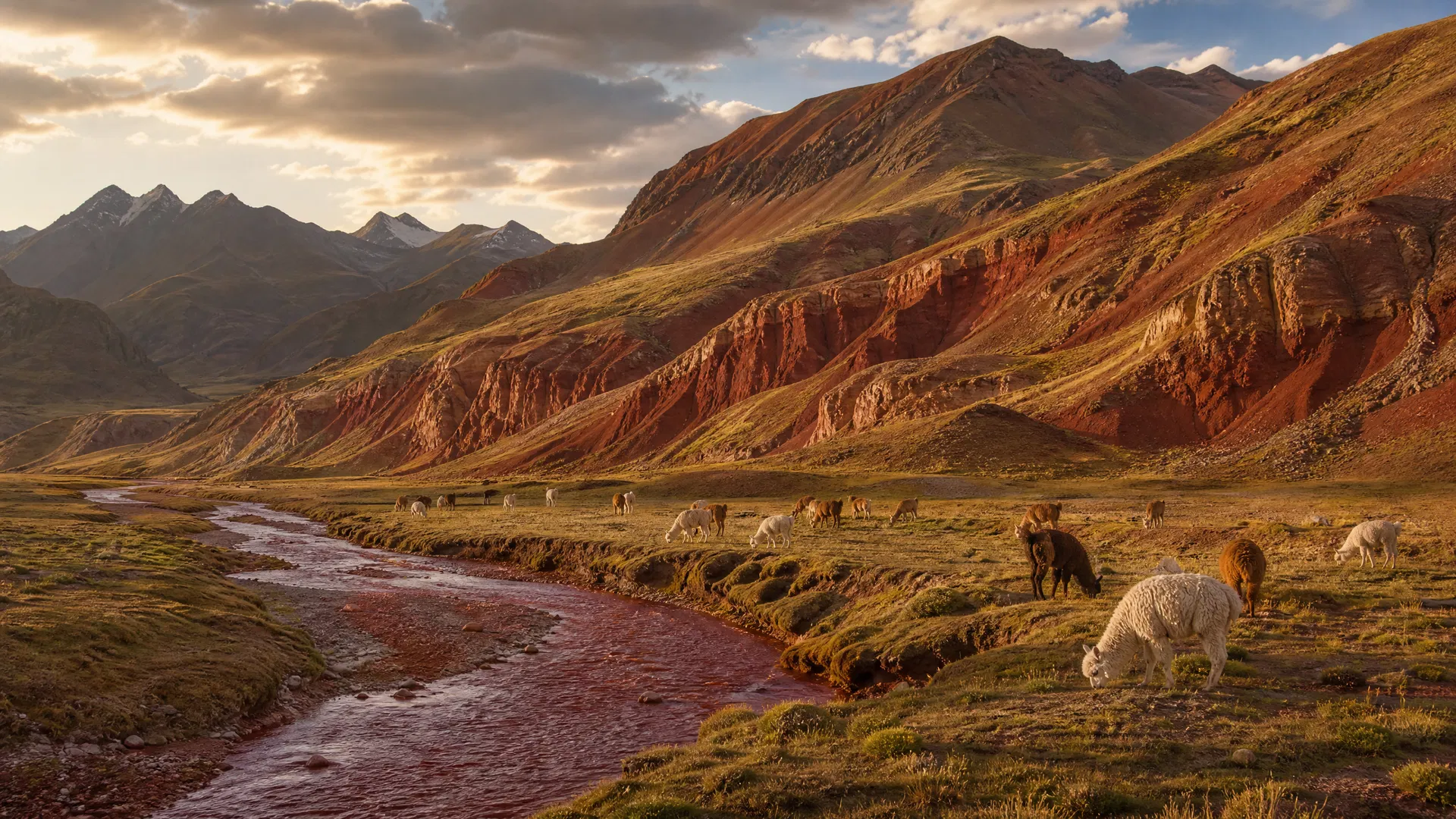
Many visitors choose Palccoyo instead of the more crowded Vinicunca because the hike is shorter and quieter.