
Q’eswachaka: The Last Inca Bridge – Travel Guide
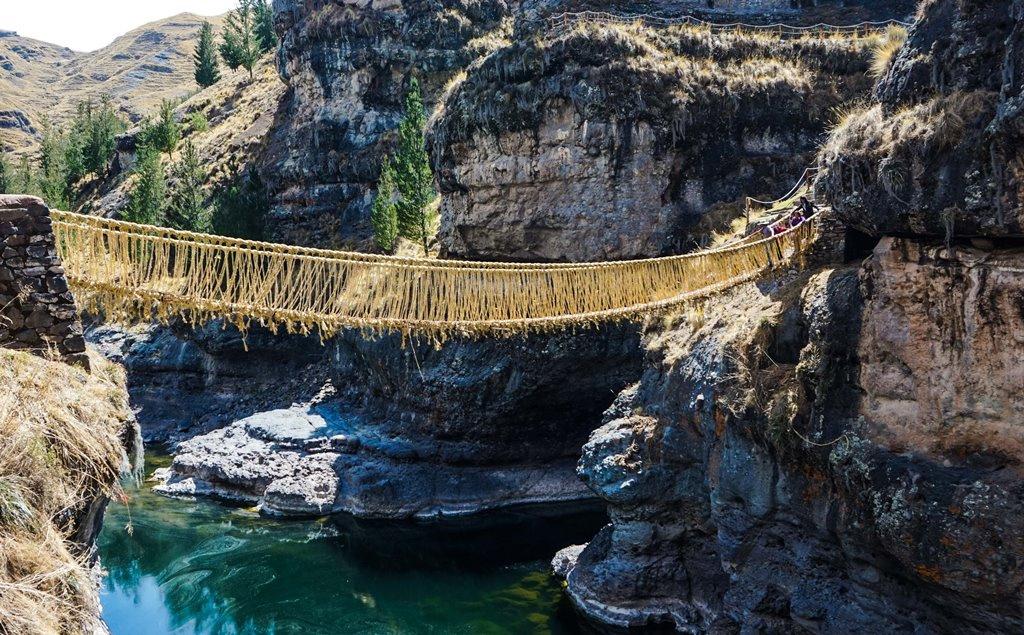
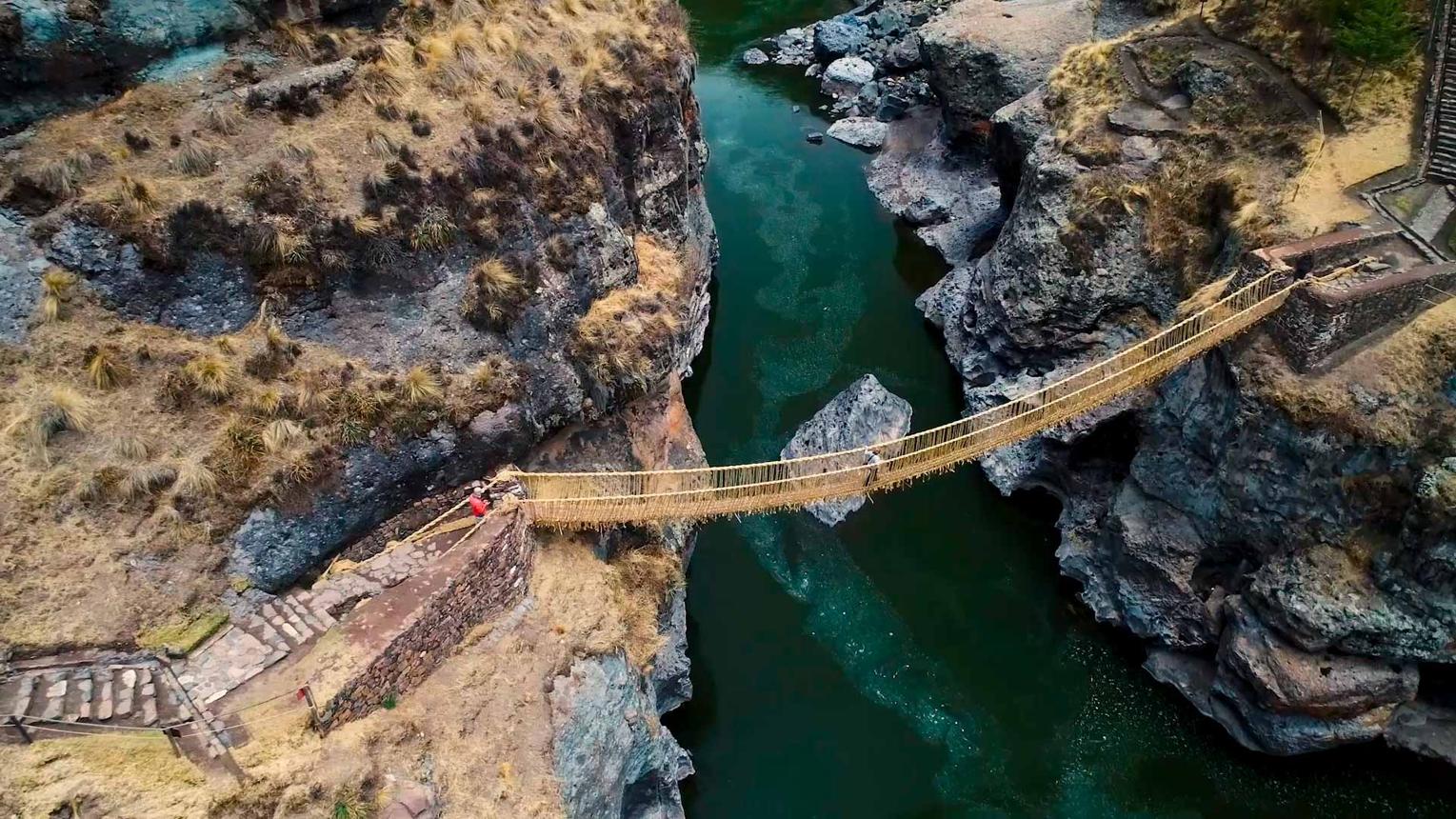
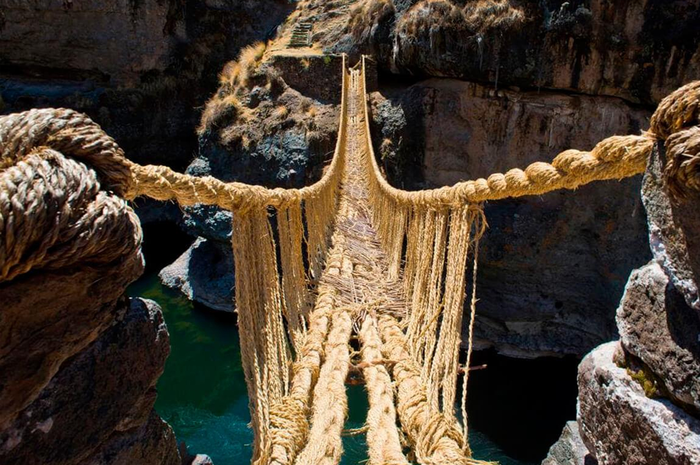
Discover Q’eswachaka, the Last Inca Bridge, an extraordinary example of ancient Inca engineering and living Andean culture. Located in the province of Canas, in the Cusco region, this impressive suspension bridge is rebuilt every year by four Quechua communities using traditional weaving techniques passed down through generations.
Crossing Q’eswachaka is more than an adventure. It is an opportunity to experience an extraordinary tradition, admire the landscapes of the Apurímac River Canyon, and discover the cultural heritage of the ancient Inca civilization.
This complete travel guide covers everything you need to know before visiting Q’eswachaka, including its history, location, how to get there, best time to visit, activities, travel tips, and frequently asked questions.
1. Where Is Q’eswachaka Located?
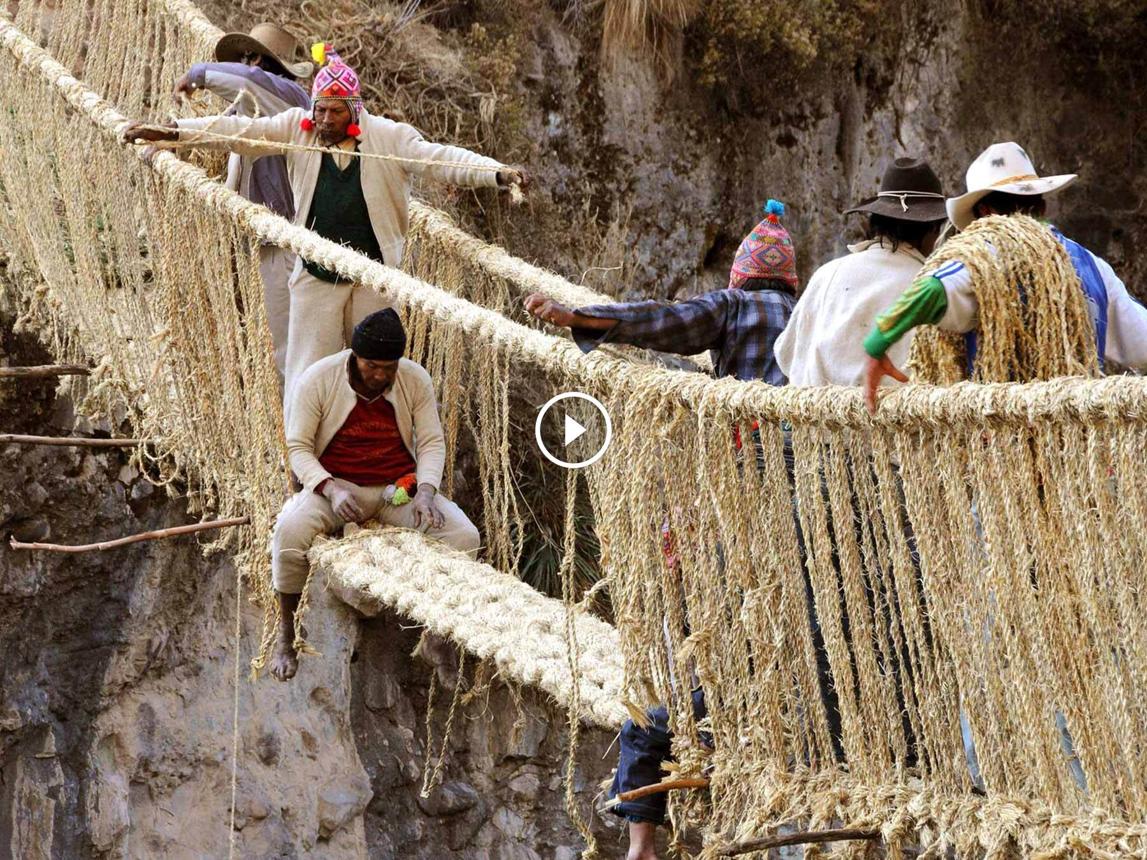
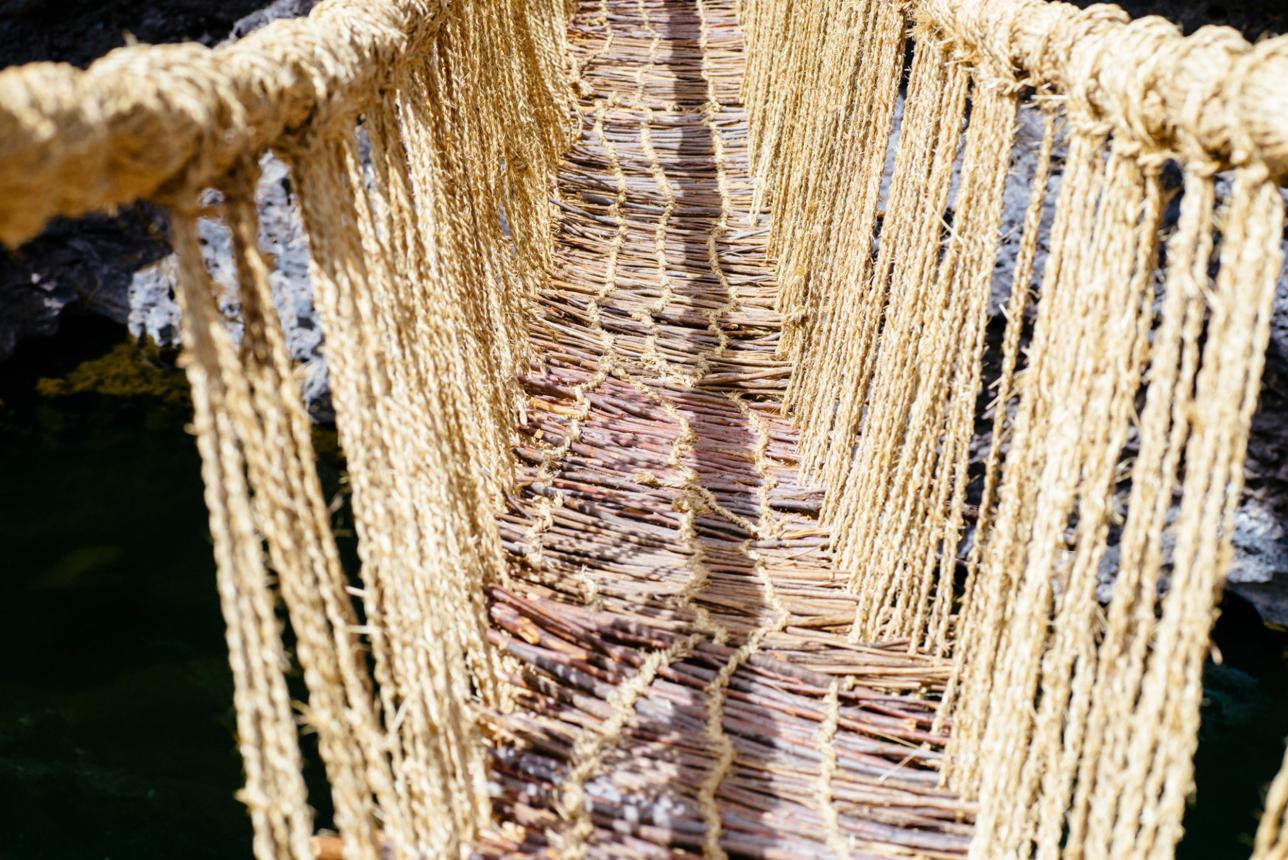
The Q’eswachaka Inca Bridge is located in the district of Quehue, province of Canas, approximately 160–180 kilometers south of Cusco, Peru.
The bridge crosses the Apurímac River, connecting two rocky sides of a deep Andean canyon. It stands at approximately 3,650–3,700 meters (11,975–12,139 feet) above sea level.
The surrounding landscape features mountains, traditional Andean communities, agricultural fields, and spectacular views of the Apurímac River.
Location details:
- Country: Peru.
- Region: Cusco.
- Province: Canas.
- District: Quehue.
- Altitude: Approximately 3,700 m (12,139 ft).
- Length: Approximately 28 meters (92 feet).
- Width: Approximately 1.20 meters (4 feet).
- River: Apurímac River.
According to Peru’s Ministry of Foreign Trade and Tourism (MINCETUR), Q’eswachaka is an important cultural attraction in the Canas province. Consultas En Línea Mincetur
2. History of the Last Inca Bridge
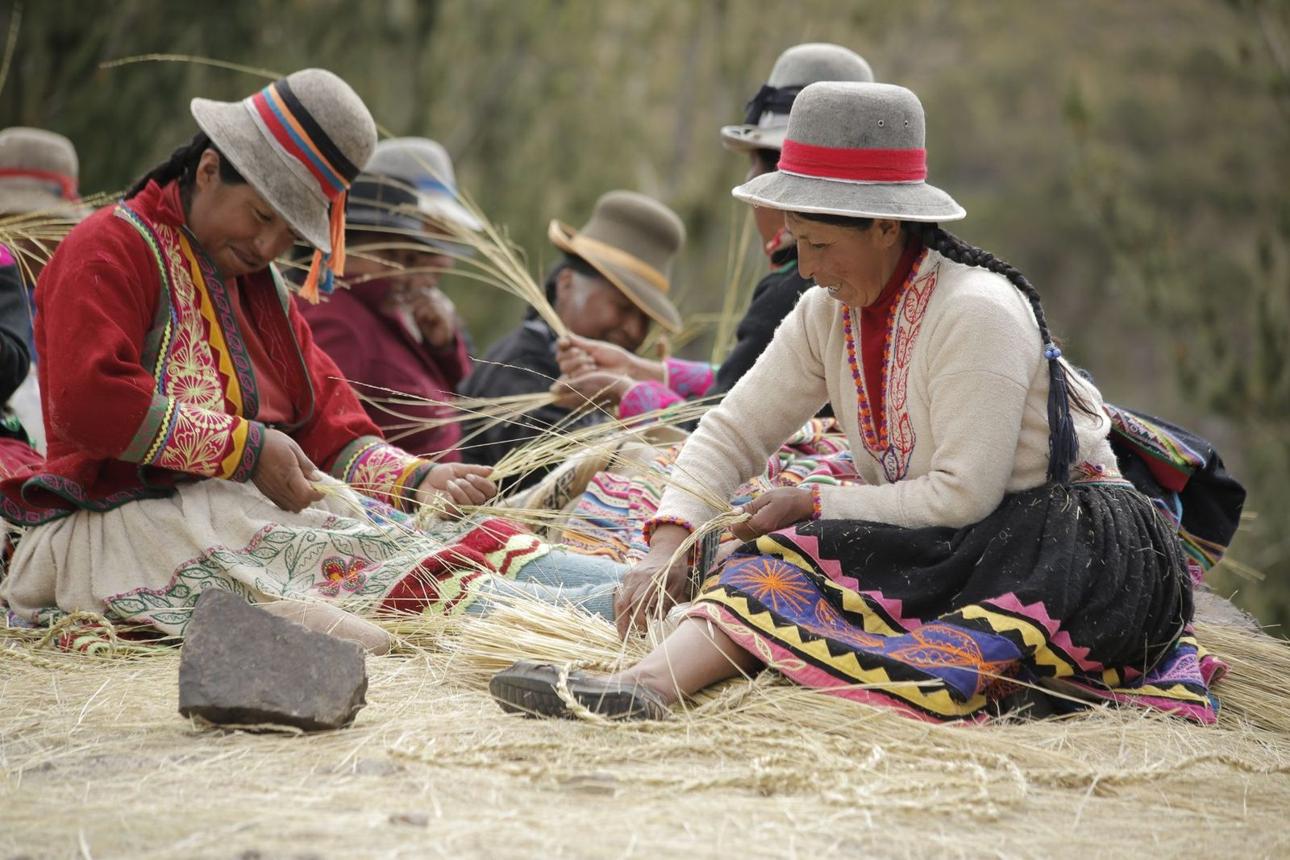
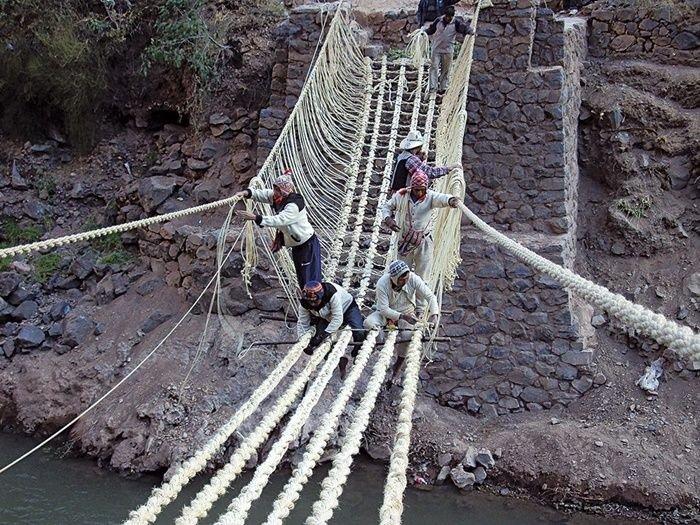
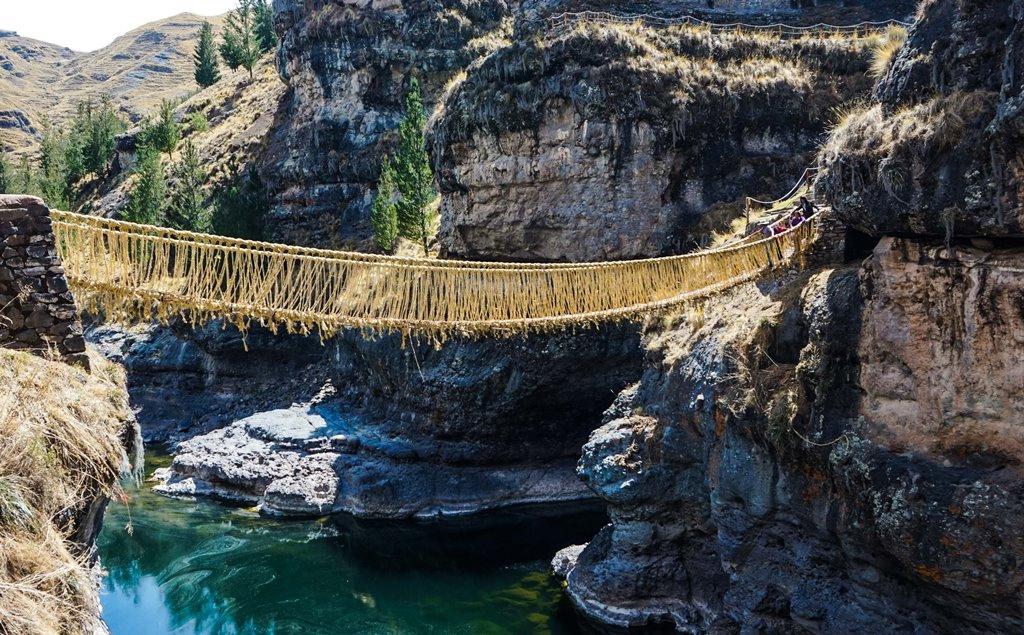
Q’eswachaka is considered the last surviving example of an Inca-style suspension bridge that continues to be reconstructed using traditional plant-fiber techniques.
During the Inca Empire, suspension bridges played an essential role in connecting communities across rivers, valleys, and deep mountain canyons.
The Incas developed an impressive road network known as the Qhapaq Ñan, which connected different territories of the Tahuantinsuyo.
Because of the challenging geography of the Andes, engineers developed bridges made from natural materials, including ichu grass and other plant fibers.
Q’eswachaka represents the continuation of this extraordinary engineering knowledge.
Today, four Quechua-speaking communities preserve this ancestral tradition:
- Huinchiri.
- Chaupibanda.
- Choccayhua.
- Ccollana Quehue.
These communities work together every year to reconstruct the bridge, preserving their cultural identity and strengthening their ancestral relationships.
In 2013, UNESCO included the knowledge, skills, and rituals associated with the annual renewal of Q’eswachaka on the Representative List of the Intangible Cultural Heritage of Humanity. UNESCO Intangible Cultural Heritage
3. How Is the Q’eswachaka Bridge Built?
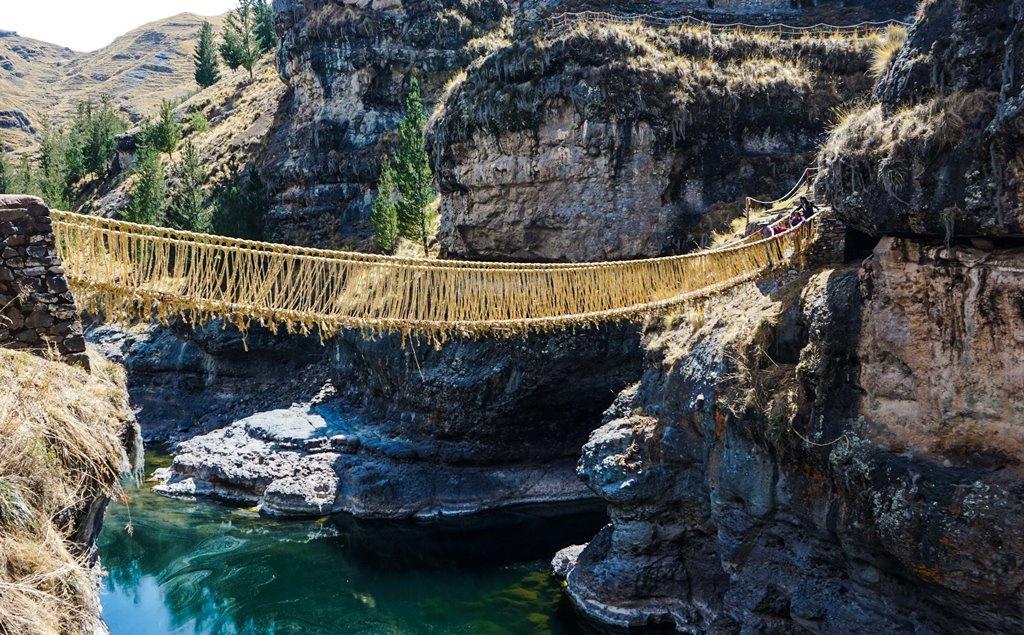
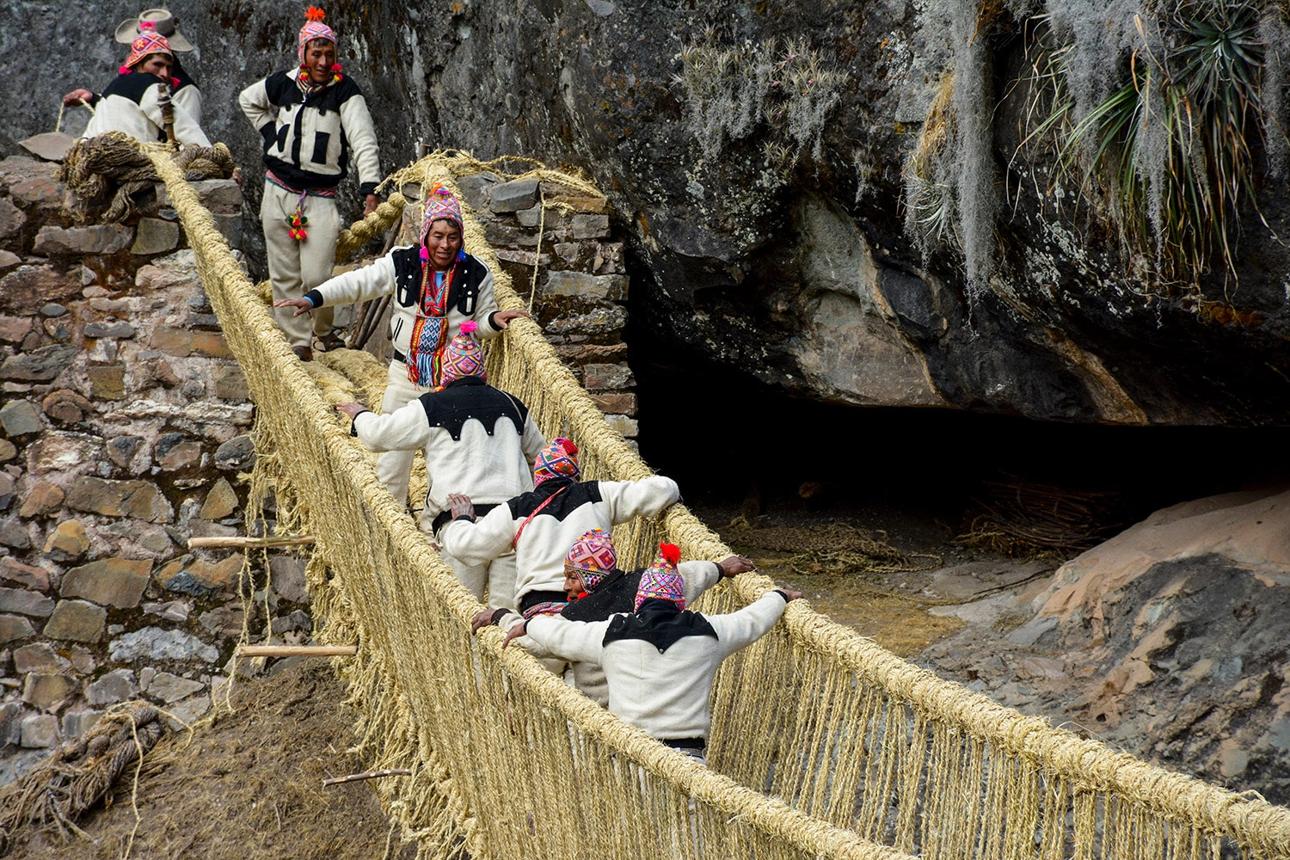
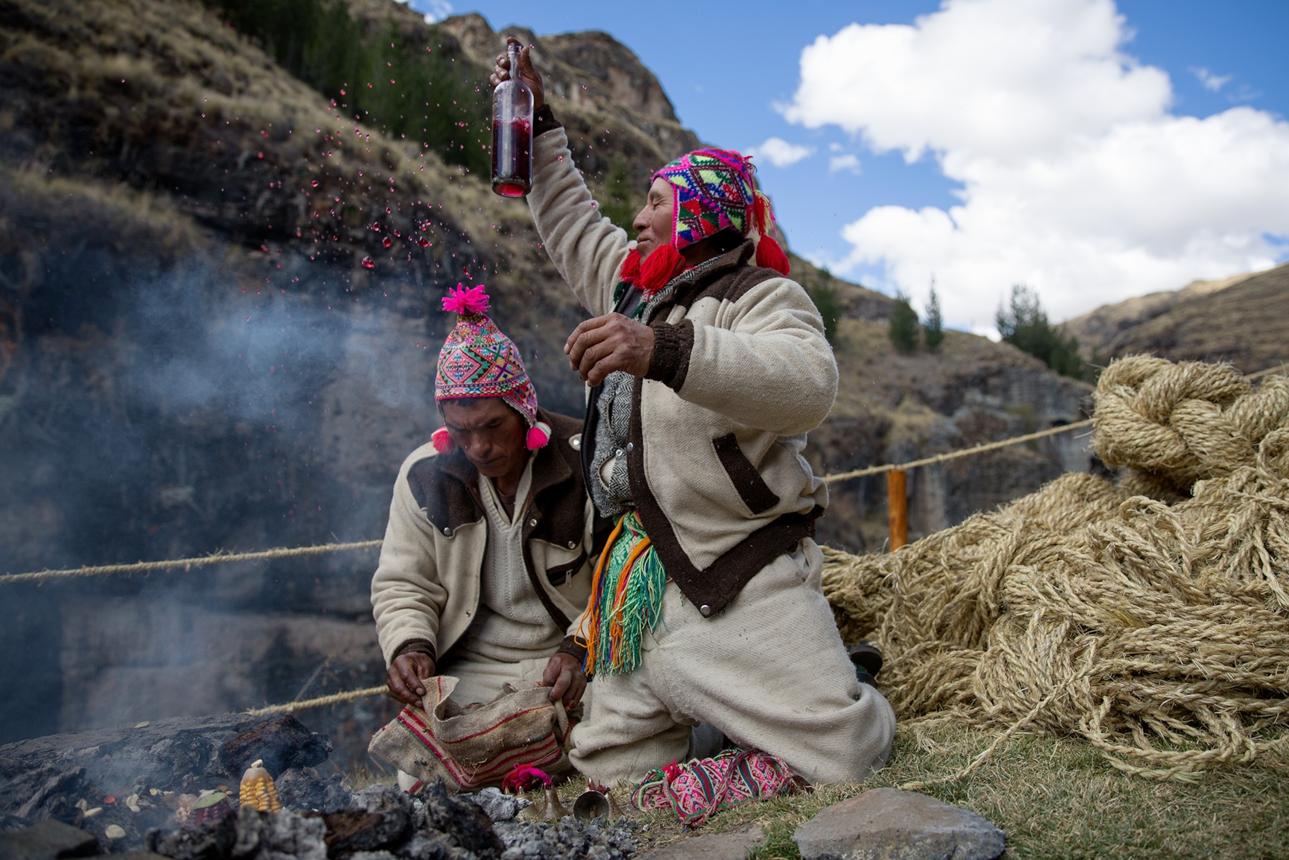
One of the most fascinating aspects of Q’eswachaka is that the entire bridge is reconstructed every year using traditional techniques.
The main material is q’oya or ichu, a natural Andean grass that is collected, dried, twisted, and woven into strong ropes.
The reconstruction process involves the participation of families from all four communities.
The main construction stages:
- Grass collection: Families collect the natural fibers used to manufacture the ropes.
- Rope preparation: The grass is twisted into smaller cords called q’eswas.
- Rope weaving: Several smaller ropes are combined to create larger structural cables.
- Bridge installation: The main cables are secured to the traditional stone foundations on both sides of the canyon.
- Final weaving: Skilled bridge builders weave the walking surface and protective handrails.
- Celebration: Once construction is complete, the communities celebrate with traditional music, dances, and ceremonies.
This process demonstrates the extraordinary knowledge of Andean engineering and the importance of collective community work, known as minka.
4. The Annual Q’eswachaka Bridge Renewal Festival
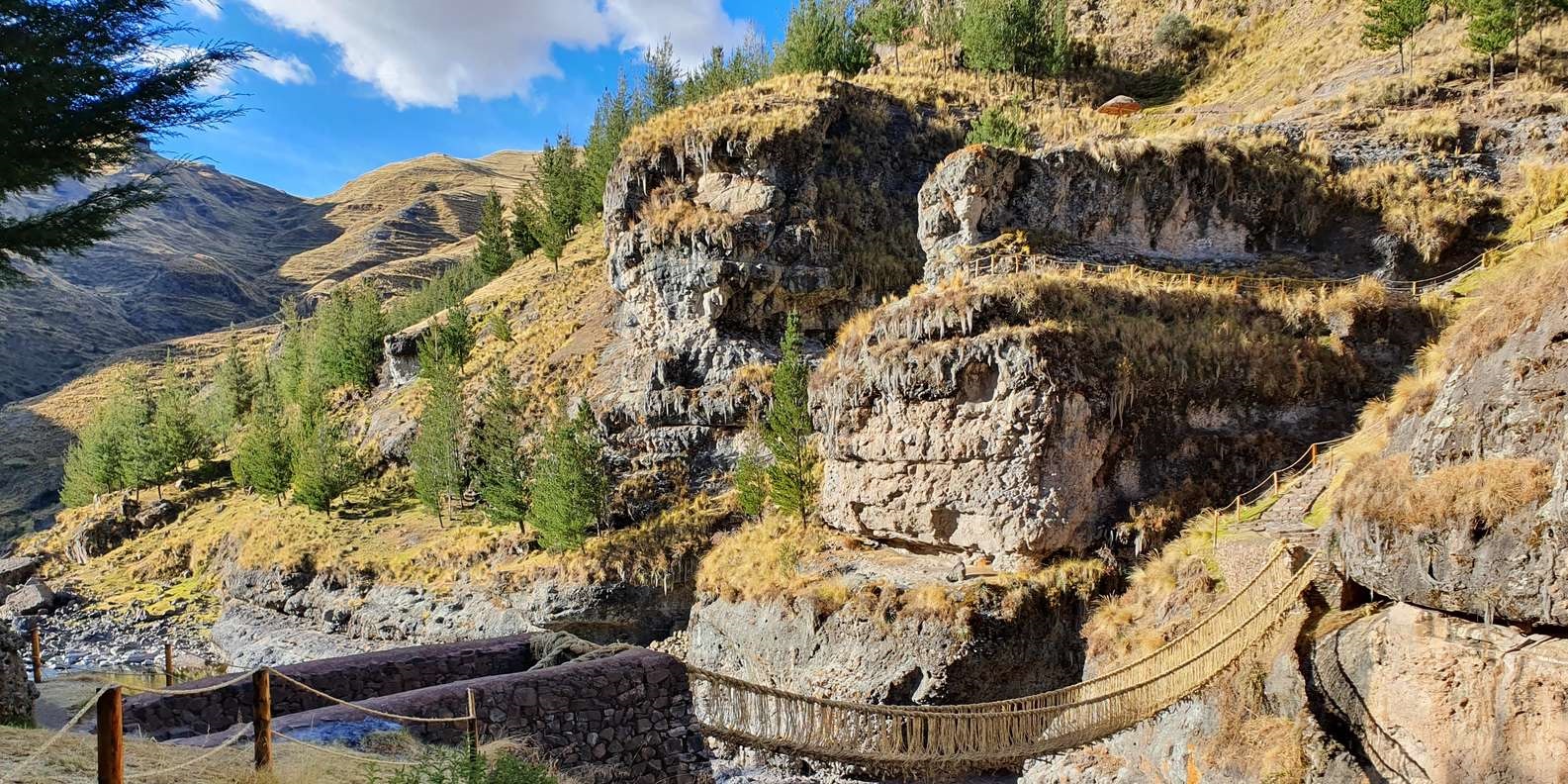
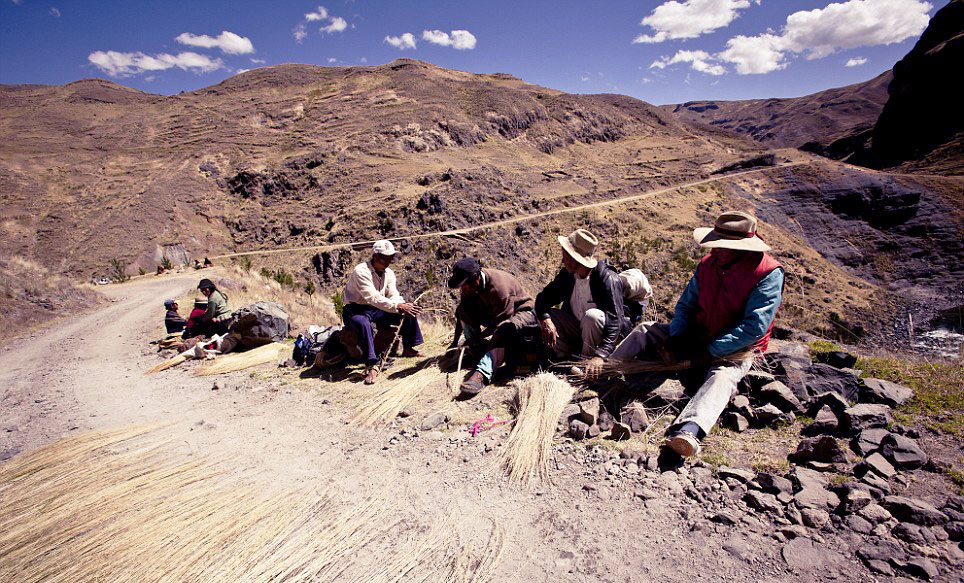
Every year, usually during the second week of June, the four communities gather to renew the bridge.
This important cultural celebration generally lasts four days and combines traditional engineering, ancestral rituals, music, and community participation.
Day 1 – Traditional ceremonies and rope preparation
The celebration begins with ancestral rituals dedicated to Pachamama (Mother Earth) and the Apus (sacred mountain spirits).
Community members prepare the grass fibers and begin weaving the ropes.
Day 2 – Installation of the main cables
The large grass ropes are transported and secured to the ancient stone foundations. These cables form the main structure of the bridge.
Day 3 – Bridge weaving
Experienced bridge builders, known as chakaruwaq, weave the walking surface and handrails.
This is one of the most impressive stages because the specialists work above the Apurímac River Canyon.
Day 4 – Celebration and inauguration
The newly reconstructed bridge is celebrated with traditional dances, music, local food, and community festivities.
The exact dates and activities can vary each year. Confirm the annual program with the local communities before travelling.
The renewal is an important cultural event, not simply a tourist attraction. Plataforma del Estado Peruano+1
5. How to Get to Q’eswachaka from Cusco
The journey from Cusco to Q’eswachaka takes approximately 4 hours by private vehicle, depending on road conditions and stops.
The route passes through beautiful Andean landscapes and traditional villages.
Route description:
- Cusco – Combapata: Travel along the southern highway.
- Combapata – Yanaoca: Continue toward the province of Canas.
- Yanaoca – Quehue: Follow the local road toward the district.
- Quehue – Q’eswachaka: Continue to the bridge and visitor access area.
Transportation options
| Transportation | Description |
|---|---|
| Private tour | Most convenient option, with transportation and a professional guide |
| Private vehicle | Flexible schedule and opportunities for photography |
| Public transportation | Possible with several connections and local transport |
For most visitors, a private full-day tour from Cusco is the most practical option.
6. Best Time to Visit Q’eswachaka Inca Bridge
Q’eswachaka can be visited throughout the year, but weather conditions can influence the travel experience.
Dry season: April to October
This is generally the best period for visiting.
- More favorable weather conditions.
- Better opportunities for photography.
- Clearer mountain views.
- Generally better road conditions.
Rainy season: November to March
During this period, rainfall is more frequent.
- Green Andean landscapes.
- Occasional cloudy skies.
- Possible road difficulties.
- Rain jackets and waterproof footwear are recommended.
Best cultural experience: June
June is especially interesting because of the annual bridge renewal festival, when visitors can observe the traditional construction process and community celebrations.
7. What to See and Do at Q’eswachaka
Visiting Q’eswachaka offers several interesting activities.
1. Cross the Inca rope bridge
Experience walking across a traditional suspension bridge made from woven grass. The structure moves gently as you walk, making the experience exciting and memorable.
Crossing is subject to local safety conditions and permission from the community.
2. Enjoy panoramic views
Admire the spectacular Apurímac River Canyon and the surrounding Andean mountains.
3. Learn about Inca engineering
Discover how ancient construction techniques continue to be preserved by local communities.
4. Discover Quechua culture
Learn about traditional weaving, community organization, ancestral rituals, and the importance of minka.
5. Photography
Capture the impressive bridge, canyon landscapes, local communities, and traditional architecture.
8. The Four Lakes Route near Q’eswachaka
Another interesting experience is combining your visit to Q’eswachaka with the famous Four Lakes Circuit.
This route allows visitors to discover beautiful high-altitude lakes surrounded by traditional Andean communities.
The four lakes are:
- Pomacanchi Lake: One of the largest lakes in the region, known for its beautiful landscapes and birdlife.
- Acopia Lake: A peaceful lake surrounded by mountains and rural communities.
- Asnaqocha Lake: A scenic Andean lake with impressive natural surroundings.
- Pampamarca Lake: A beautiful destination for photography and nature observation.
Combining the bridge with these lakes provides a more complete cultural and natural experience in the Canas region.
9. What to Bring for Your Q’eswachaka Tour
Because the bridge is located at approximately 3,700 meters above sea level, visitors should prepare for high-altitude conditions.
Recommended packing list:
- Comfortable walking shoes.
- Warm jacket.
- Waterproof jacket during the rainy season.
- Sunglasses.
- Sunscreen.
- Hat or cap.
- Reusable water bottle.
- Small backpack.
- Camera or smartphone.
- Cash in Peruvian soles.
- Personal medication.
Altitude recommendation: Spend at least one or two days acclimatizing in Cusco before undertaking high-altitude excursions, especially if you have recently arrived from a low-altitude destination.
10. Responsible Tourism at Q’eswachaka
Q’eswachaka is an important example of living cultural heritage. Responsible tourism helps protect the bridge and supports the communities that preserve this tradition.
Visitors should follow these recommendations:
- Respect local customs and ancestral ceremonies.
- Follow the instructions of community members.
- Do not damage or remove the grass fibers.
- Avoid throwing rubbish into the canyon or river.
- Ask permission before photographing local residents.
- Support local products and community services.
- Never cross the bridge when access is restricted.
- Respect the traditional construction process.
Remember that Q’eswachaka belongs to a living cultural tradition, and its preservation depends on the continued participation of the local communities.
11. Sample Q’eswachaka Full-Day Itinerary from Cusco
A full-day excursion is the most popular way to visit the bridge from Cusco.
| Time | Activity |
|---|---|
| 04:30 AM | Hotel pickup in Cusco |
| 06:30 AM | Scenic drive through the southern Cusco region |
| 07:30 AM | Breakfast stop |
| 09:00 AM | Arrival at Q’eswachaka |
| 09:00 AM – 10:30 AM | Visit the bridge, learn its history and enjoy the viewpoints |
| 10:30 AM | Optional crossing, subject to safety authorization |
| 11:30 AM | Continue exploring the surrounding area |
| 12:30 PM | Lunch |
| 02:00 PM | Return journey toward Cusco |
| 05:30 PM – 06:30 PM | Arrival in Cusco |
This is a suggested itinerary. Actual schedules depend on road conditions, weather, stops, and the tour operator.
12. Frequently Asked Questions About Q’eswachaka
1. Where is the Q’eswachaka Inca Bridge located?
It is located in the district of Quehue, province of Canas, in the Cusco region of southern Peru.
2. Why is Q’eswachaka called the Last Inca Bridge?
Because it is the last surviving Inca-style grass suspension bridge that continues to be rebuilt using traditional ancestral techniques.
3. How long is the Q’eswachaka Bridge?
The bridge is approximately 28 meters long and 1.20 meters wide.
4. How high is Q’eswachaka above sea level?
It is located at approximately 3,700 meters (12,139 feet) above sea level.
5. How far is Q’eswachaka from Cusco?
It is approximately 160–180 kilometers from Cusco, depending on the route measurement, and takes around four hours by road.
6. Can visitors cross the bridge?
Yes, visitors can normally cross it when local authorities and community caretakers consider it safe. Follow their instructions and respect any temporary restrictions.
7. When is the Q’eswachaka Bridge rebuilt?
The bridge is traditionally renewed every year during June, usually around the second week of the month.
8. How many communities participate in the reconstruction?
Four Quechua communities participate: Huinchiri, Chaupibanda, Choccayhua, and Ccollana Quehue.
9. Is Q’eswachaka a UNESCO World Heritage Site?
The knowledge, skills, and rituals associated with the annual renewal of Q’eswachaka were inscribed on UNESCO’s Representative List of the Intangible Cultural Heritage of Humanity in 2013. This is an intangible cultural heritage designation, rather than a World Heritage Site designation for the bridge itself.
10. Can I visit Q’eswachaka in one day from Cusco?
Yes. A full-day excursion is sufficient to visit the bridge and return to Cusco, provided you leave early.
11. What is the best month to visit Q’eswachaka?
June is ideal for experiencing the annual reconstruction festival. April through October generally offers more favorable travel conditions.
12. Is Q’eswachaka suitable for everyone?
The visit involves high altitude, a long road journey, and walking on uneven terrain. People with mobility limitations or difficulty tolerating heights should consider these conditions before travelling.
13. Why Visit Q’eswachaka with Pacha Expeditions?
At Pacha Expeditions, we believe that travelling through Peru is about discovering its history, traditions, and authentic cultural experiences.
Our Q’eswachaka excursion offers the opportunity to explore one of the most remarkable examples of living Inca heritage while discovering the spectacular landscapes of the southern Cusco region.
As a 100% local tourism company, we are committed to responsible tourism, personalized experiences, and supporting local communities.
Discover the Last Inca Bridge with Pacha Expeditions!
- Local tourism professionals.
- Personalized travel experiences.
- Professional tourism guides.
- Cultural and nature excursions.
- Responsible tourism practices.
- Authentic experiences in the Andes.