
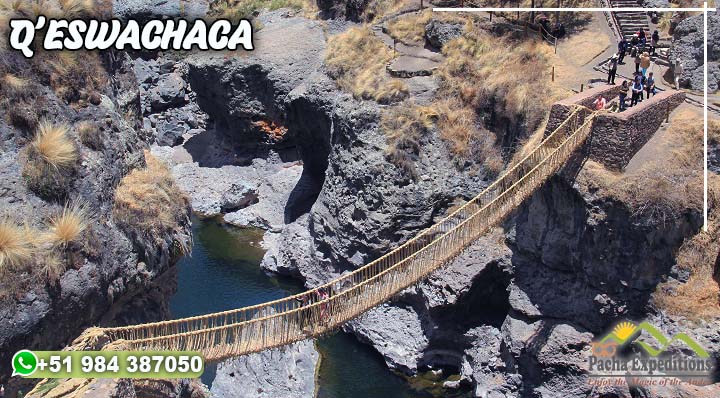

Qeswachaka Inca Bridge: Architecture reached levels of development that even today surprise the entire world. People still maintain a sample of this ingenuity in the Cusco region. Three hours from the city, in the province of Canas, in the district of Quehue, lies the Qeswachaka Inca bridge. UNESCO declared this Inca creation as Intangible Cultural Heritage, and locals use it to cross the Apurimac River.
This bridge spans 28 meters in length and 1.20 meters in width, constructed to date with ichu. The Qhapaq Ñan road system incorporated this bridge approximately 500 years ago. Therefore, traditions and customs persist, accompanied by rituals for their realization. Also, the Qeswachaka Inca Bridge is the last one to withstand modernity and continues passing its ritual from generation to generation. It offers a new tourist alternative in Cusco.
Overview
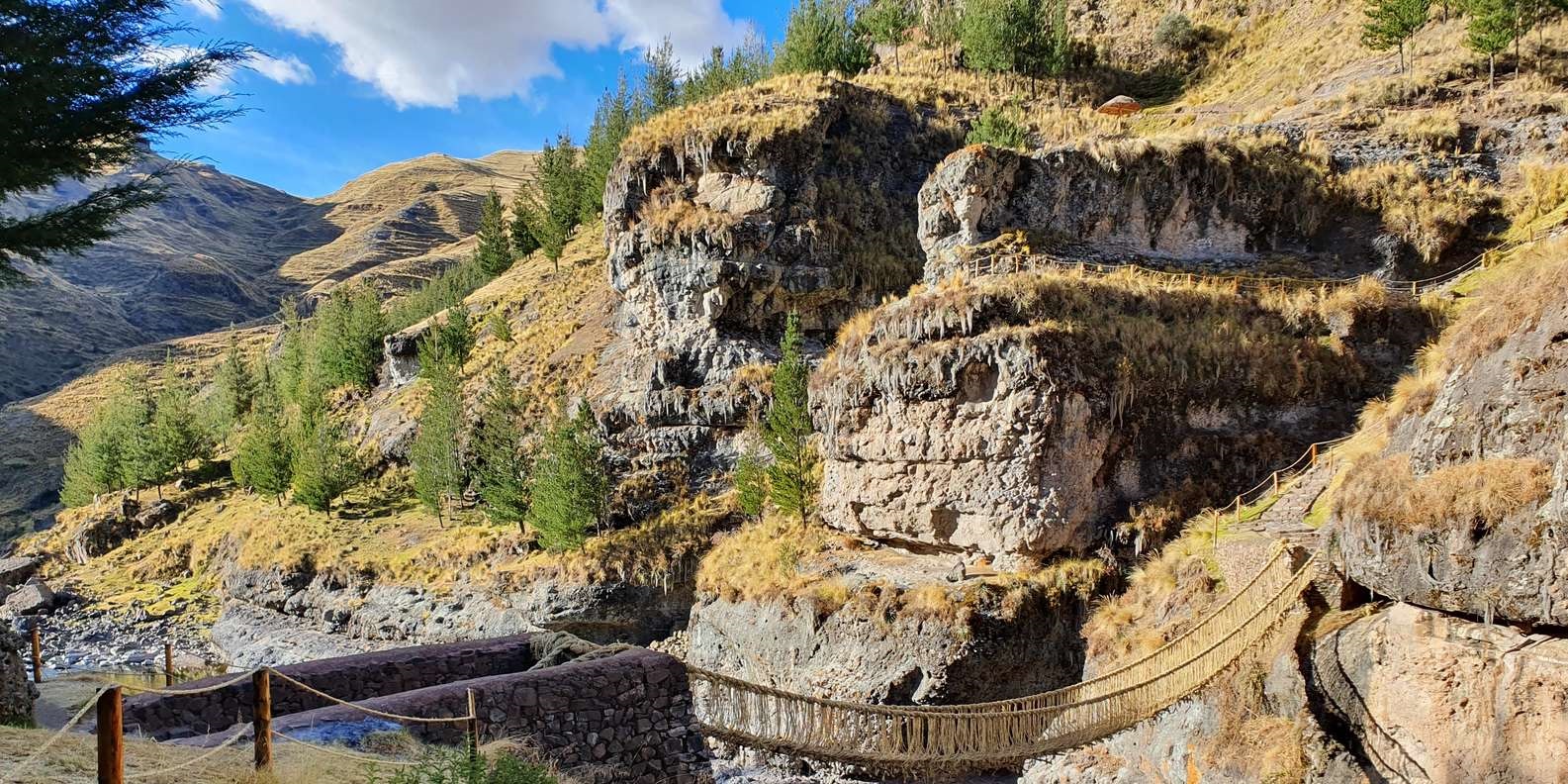
The Qeswachaka Inca Bridge is one of the most extraordinary cultural attractions in Peru and a remarkable testament to ancient Inca engineering. Spanning the dramatic Apurímac River canyon in the southern Andes of Cusco, local communities continue to rebuild Qeswachaka using traditional techniques their ancestors have passed down for more than 500 years.
Qeswachaka (also spelled Q'eswachaka) is a suspension bridge that artisans weave entirely from natural fibers known as ichu grass, a native Andean plant. The bridge stretches approximately 36 meters (120 feet) across the Apurímac River and hangs high above a deep canyon in the province of Canas, south of Cusco.
Originally, the bridge formed part of the vast Inca road network known as the Qhapaq Ñan, which connected distant regions of the empire across mountains, valleys, and rivers.
*Difficulty level depends very much on your fitness and acclimatization.
Useful Information
- Location: Quehue, Canas, Cusco
- Altitude Approximately: 3,700 m (12,140 ft)
- Distance from Cusco: About 160 km
- Travel Time: 3.5–4 hours each way
- Tour Duration: Full Day
- Bridge Material: Handwoven ichu grass
- Best Season: April to October
- UNESCO Recognition: Intangible Cultural Heritage
History and meaning
The Qeswachaka is part of the ancient Inca Trail. Local communities have renovated it annually for over 500 years using traditional techniques. Its construction and maintenance represent a strong cultural and spiritual bond with the Inca ancestors. In 2013, UNESCO declared it Intangible Cultural Heritage of Humanity.
Construction and renovation
Every year in June, four Quechua communities (Huinchiri, Chaupibanda, Choccayhua and Ccollana Quehue) renew the bridge in a three-day ceremony. The main material is ichu (Andean straw), which is woven into thick ropes. The final structure measures approximately 28 meters long and 1.20 meters wide. Height: It is located more than 15 meters above the Apurimac River.
DAY 1.- CUSCO - QESWACHAKA INCA BRIDGE - CUSCO.
Itinerary
DAY 1.- CUSCO - QESWACHAKA INCA BRIDGE - CUSCO.
The full day tour to the Qeswachaka inca bridge, begins in the city of Cusco, very early, we will pick you up at your hotel. At the indicated time, to then depart in the south direction of the city, until you reach the Chuquicahuana bridge and continue in the tourist circuit of the four lagoons (approx. 2 hours trip): knowing the following Pomacanchi, Acopia, Asnacocha and Pampamarca lagoons or Tungasuca.
After enjoying a quiet moment near the lagoons, we will visit a small Volcano located near the town of Yanaoca. Beautiful, which stopped in its growth, today is an attraction very close to the road.
We continue with the trip through beautiful landscapes to reach the Apurimac River, where we can observe the Inca suspension bridge made of vegetable fiber (Ichu) over the Apurimac River in the district of Quehue. Dating from the Inca season, local community members renovate and maintain the bridge once a year. The full-day ride to the Inca bridge Qeswachaka also features very beautiful scenery, and here we can also observe the customs and traditions of the local people. Our exciting tour will finally end with the return to the city of Cusco at approximately 6:00 p.m.
Includes
WHAT IS INCLUDED:
- Tourist Bus
- English and Spanish speaking guide
- A boxed lunch (including mineral water)
- Vegetarian/vegan options available (no extra charge).
- Entrance to the lagoons and Qeswachaka
- First aid including an emergency oxygen bottle
DOES NOT INCLUDE:
- Extra expenses
- Tips
- Others not mentioned
More Information
WHAT YOU NEED TO TAKE.
- Tips for your guide and driver
- What you need to bring:
- A warm jacket
- Water
- Hat
- Sunscreen
- Rain gear
- Extra money
Price & Add-ons
Group: U$: 50
Private: U$: 150
Group versus Private Treks: What’s the difference?
- Depending on the number of people in your booking, additional people may join the trek to make a full group.
- If you choose “private”, no additional people will be joining your group, no matter the size.
- Minimum booking size is two people; one person may book a group trek if Pacha Expeditions Travel Peru, is able to join that person with additional groups.
Rentals
- Hiking poles – USD $10 (pair)
Map (Qeswachaka inca bridge)

Frequently Asked Questions About the Qeswachaka Inca Bridge
Planning to visit the legendary Qeswachaka Inca Bridge? Here are the most common questions travelers ask before experiencing one of Peru’s most remarkable cultural and historical attractions.
What is the Qeswachaka Inca Bridge?
Qeswachaka is the last remaining Inca rope bridge still maintained using traditional methods passed down through generations. The bridge is handwoven from natural ichu grass fibers and spans the Apurímac River in the Cusco region of Peru.
Where is the Qeswachaka Bridge located?
The bridge is located in the Quehue District, within the Canas Province of the Cusco Region, approximately 160 kilometers (100 miles) southeast of Cusco.
How far is Qeswachaka from Cusco?
The journey from Cusco to Qeswachaka takes approximately 3.5 to 4 hours each way by vehicle, making it a popular full-day excursion.
Why is Qeswachaka famous?
Qeswachaka is famous for its status as the last surviving Inca suspension bridge, which locals rebuild annually using ancestral techniques. This practice represents a living tradition that has been preserved for more than 500 years.
Is Qeswachaka a UNESCO Heritage tradition?
In 2013, UNESCO inscribed the knowledge, skills, and rituals associated with the annual renewal of the Qeswachaka Bridge on its Representative List of the Intangible Cultural Heritage of Humanity.
Can visitors walk across the bridge?
Yes. Visitors can walk across the bridge during the tour, provided weather and safety conditions allow it. Crossing the bridge is one of the highlights of the experience.
Is it safe to cross the bridge?
Yes. The bridge is rebuilt every year by local communities using traditional techniques and is carefully maintained. While it may sway slightly when crossed, it is considered safe for visitors.
What is the bridge made of?
The bridge is constructed entirely from ichu grass, a native Andean grass that grows at high altitudes. The fibers are braided into ropes and woven together to create the bridge structure.
How long is the Qeswachaka Bridge?
The bridge measures approximately:
- 36 meters (120 feet) long
- About 1.2 meters (4 feet) wide
It stretches across a deep canyon above the Apurímac River.
What is the altitude of Qeswachaka?
The bridge sits at approximately 3,700 meters (12,140 feet) above sea level.
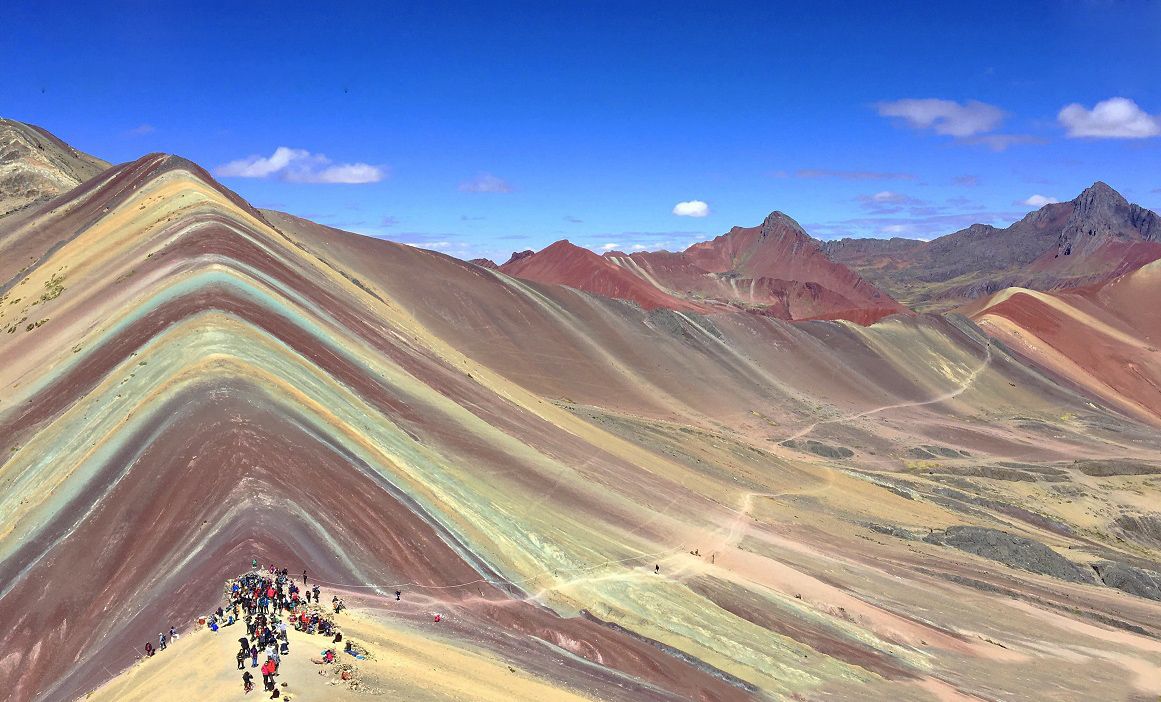
Although lower than Rainbow Mountain, visitors may still feel the effects of altitude.
Do I need to acclimatize before visiting?
Yes. Spending at least 1–2 days in Cusco before the tour is recommended to help your body adjust to the altitude.
How difficult is the Qeswachaka Tour?
The tour is generally considered easy to moderate.
Most of the day involves transportation and short walks around viewpoints and attractions. No technical hiking experience is required.
How long does the tour last?
The Qeswachaka tour is typically a full-day experience lasting approximately:
- Departure: 4:30–5:00 AM
- Return to Cusco: 5:00–6:00 PM
The exact schedule may vary depending on traffic and weather conditions.
When is the bridge rebuilt?
The bridge is renewed annually during a traditional ceremony held in June.
During this event, local communities work together over several days to replace the entire bridge using ancestral methods.
Which communities rebuild the bridge?
The annual reconstruction is carried out by four Quechua-speaking communities:
- Huinchiri
- Chaupibanda
- Choccayhua
- Ccollana Quehue
These communities preserve the knowledge and traditions associated with the bridge.
What is the weather like at Qeswachaka?
Dry Season (April–October)
- Sunny days
- Cool mornings
- Excellent visibility
Rainy Season (November–March)
- Increased rainfall
- Cloudier conditions
- Occasional muddy paths
Layered clothing is recommended year-round.
What is the best time to visit Qeswachaka?
The best months are:
- April
- May
- June
- July
- August
- September
- October
The dry season offers the best weather and clearer views of the surrounding landscapes.
What other attractions can I see during the tour?
Many Qeswachaka tours also include visits to beautiful Andean lagoons and viewpoints, such as:
- Pomacanchi Lagoon
- Acopia Lagoon
- Asnaqocha Lagoon
- Pampamarca Lagoon
These scenic stops add to the cultural and natural experience of the day.
Is food included in the tour?
Most organized tours include:
- Breakfast
- Buffet lunch
- Tourist transportation
- Professional guide
Always verify tour inclusions before booking.
Are entrance fees included?
This depends on the tour package. Some tours include all entrance fees, while others may require payment on arrival.
Is Qeswachaka suitable for children?
Yes. The tour is suitable for families with children who are comfortable traveling at high altitudes and walking short distances.
Is Qeswachaka suitable for older travelers?
Yes. Since the tour does not involve strenuous trekking, it is often recommended for seniors and travelers looking for a cultural experience rather than a demanding hike.
What makes Qeswachaka unique?
Qeswachaka is unique because it is not simply a historical monument—it is a living cultural tradition. The bridge continues to be rebuilt every year using the same techniques employed during the Inca Empire, making it one of the most authentic cultural experiences in Peru.
Why Book the Qeswachaka Tour with Pacha Expeditions?
With Pacha Expeditions, you will enjoy:
- Expert local guides
- Comfortable transportation
- Small-group experiences
- Authentic cultural insights
- Responsible and sustainable tourism practices
- Personalized service from start to finish
Reserve your Qeswachaka Inca Bridge Tour today and discover one of Peru’s most extraordinary living traditions.