
Ausangate Trek vs Choquequirao Trek – Complete Guide.
Ausangate Trek vs Choquequirao Trek: If you are looking for a challenging trekking experience in Cusco, Ausangate Trek and Choquequirao Trek are two of the best alternatives to the more popular Inca Trail and Salkantay Trek. However, they offer very different experiences.
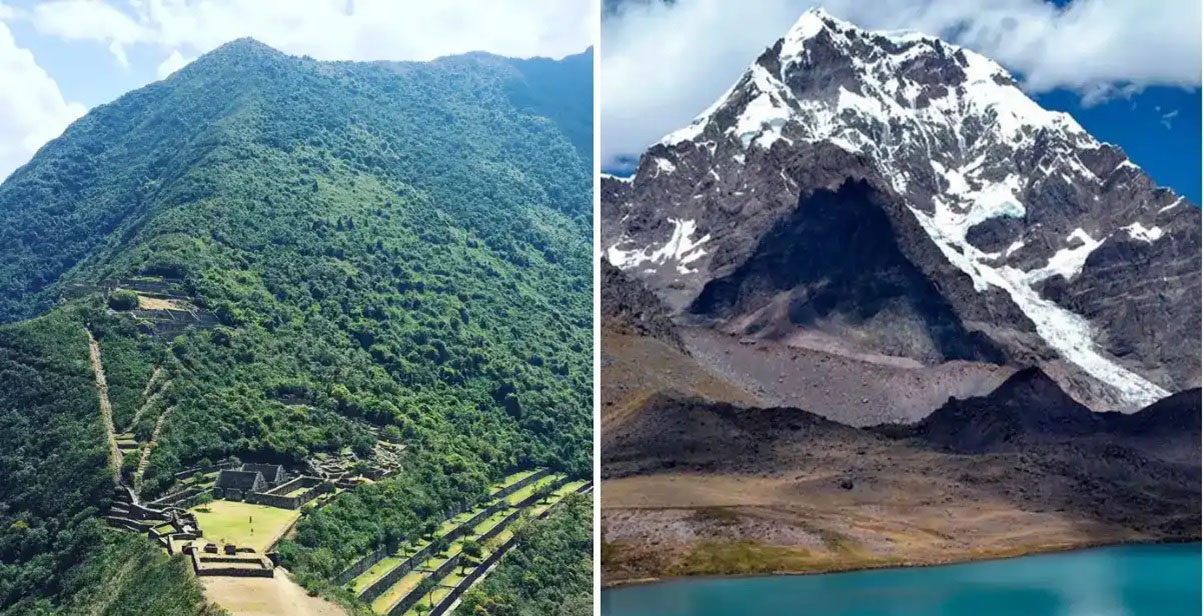
Ausangate is primarily a high-altitude adventure focused on glaciers, turquoise lagoons, colorful mountains, alpacas and dramatic Andean landscapes. Choquequirao combines demanding trekking with archaeology, history, deep canyons and one of the most impressive Inca archaeological complexes in southern Peru. Peru’s official tourism portal lists both among the country’s important trekking experiences.
Ausangate Trek vs Choquequirao Trek: Quick Comparison
| Feature | Ausangate Trek | Choquequirao Trek |
|---|---|---|
| Main attraction | Mountains, lagoons and glaciers | Inca archaeology and landscapes |
| Location | Cordillera Vilcanota, Cusco | Apurímac/Cusco region |
| Typical duration | 5 days / 4 nights | 4 days / 3 nights or longer |
| Difficulty | Very challenging | Challenging to very challenging |
| Highest elevations | Around 5,000+ m on trekking passes | Around 3,000–4,000+ m depending on route |
| Landscape | High Andes, glaciers, lagoons, bofedales | Canyons, valleys, cloud forest and mountains |
| Archaeological focus | Limited | Excellent |
| Wildlife | Alpacas, llamas, vicuñas and Andean birds | Andean and subtropical ecosystems |
| Camping | Essential | Essential on traditional routes |
| Crowds | Generally fewer | Generally fewer than Machu Picchu |
| Best for | Mountain and nature lovers | History and adventure lovers |
1. Ausangate Trek
The Ausangate Trek takes you around the sacred Nevado Ausangate in the Cordillera Vilcanota. Ausangate is considered an Apu, or sacred mountain, within the Andean worldview.
The mountain reaches approximately 6,193 m above sea level, although trekkers do not climb to its summit on the classic circuit. Peru Travel describes the standard experience as approximately 5 days and 4 nights, beginning from Tinke.
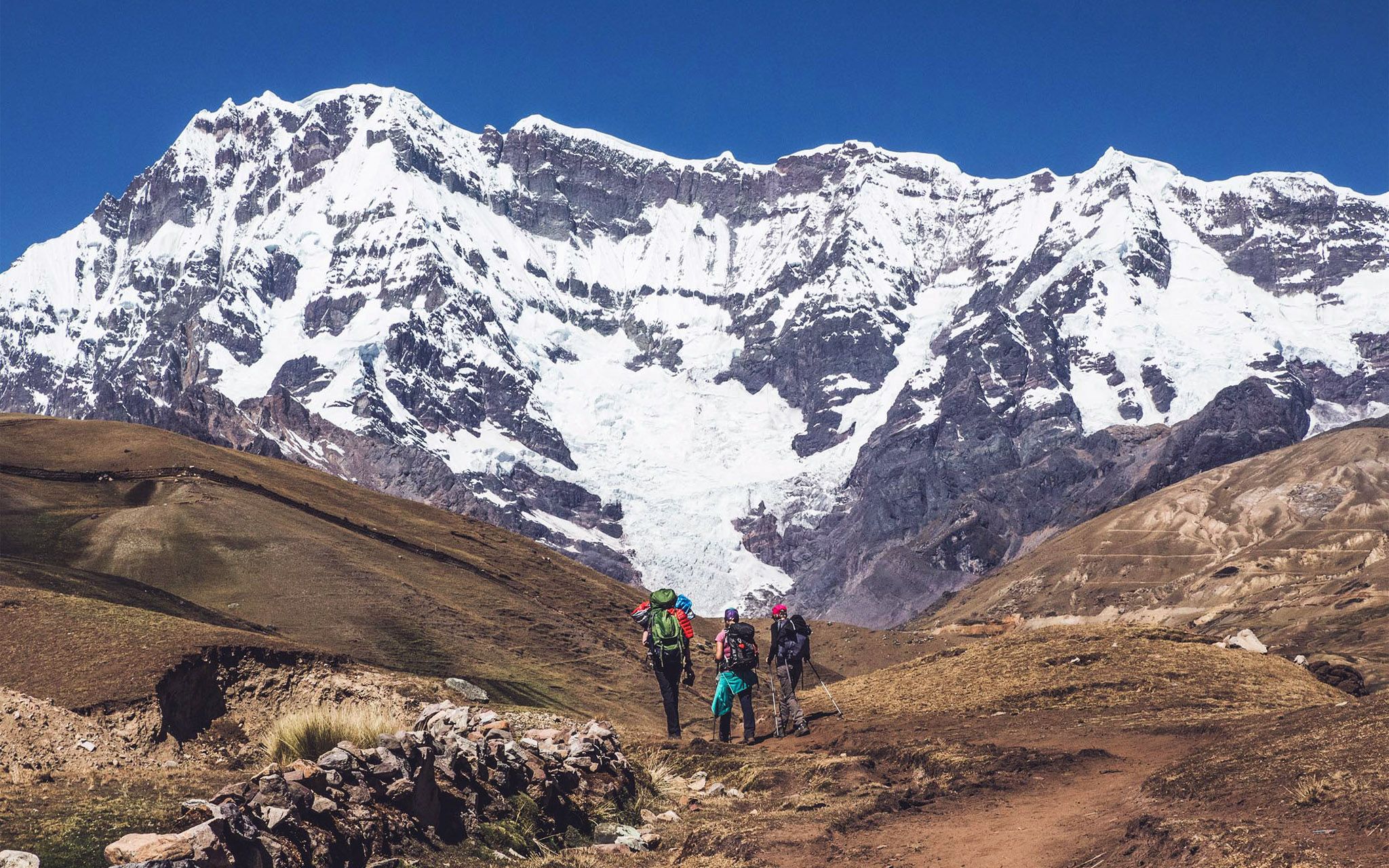


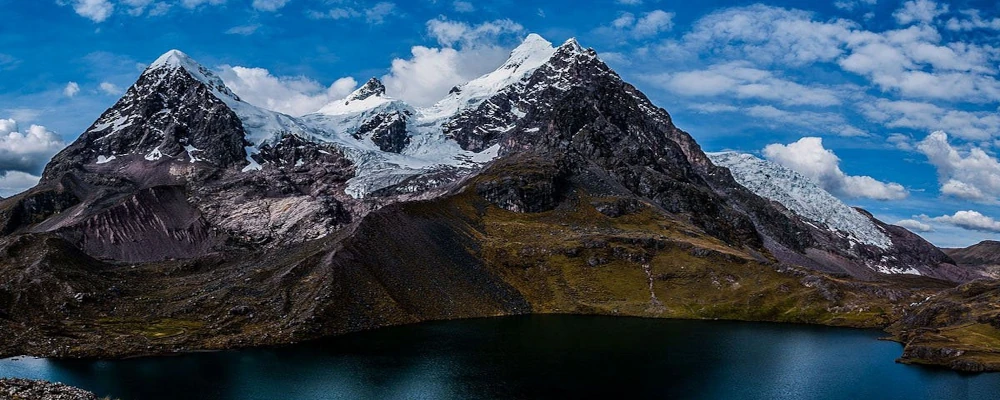
The route is famous for its combination of:
- Snow-capped mountains
- Turquoise and multicolored lagoons
- High-altitude valleys
- Bofedales
- Alpacas and llamas
- Vicuñas
- Hot springs
- Glaciers
- Colorful mountain formations
- Traditional Andean communities
A longer description from Peru Travel notes that the classic circuit can cover around 70 km over five days, making it one of the more demanding trekking experiences in the Peruvian Andes.
Highlights of Ausangate
Ausangate Mountain:
The imposing sacred mountain dominates much of the route.
Seven Lagoons:
The Circuit of the 7 Lagoons is one of the most popular sections of the Ausangate region, with turquoise, blue and emerald-colored lakes surrounded by high mountains.
Rainbow Mountain:
Depending on the itinerary, the trek can be combined with Vinicunca or other attractions in the Vilcanota region.
Andean wildlife:
It is common to encounter alpacas, llamas and, with some luck, vicuñas.
Difficulty of the Ausangate Trek
Very challenging.
The principal challenge is not only the distance but altitude. Several sections of the trek are above 4,000 m, and mountain passes can exceed 5,000 m depending on the itinerary.
For this reason, acclimatization in Cusco is particularly important.
2. Choquequirao Trek
The Choquequirao Trek is one of Peru’s great adventure routes for travelers who want to combine physical challenge with Inca history.
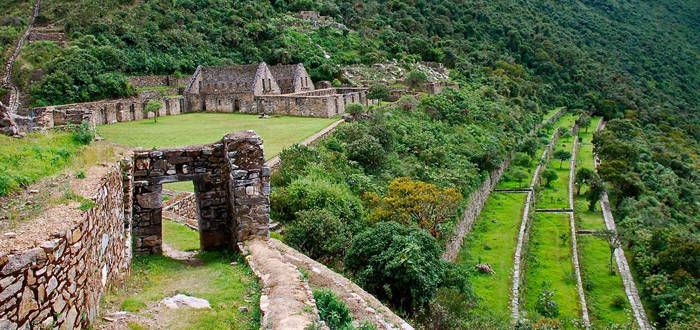
Choquequirao is an extensive archaeological complex located in a remote mountainous environment. Peru Travel describes the site as a former Inca refuge associated with the final period of Inca resistance and highlights its terraces, ceremonial areas and distinctive terraces decorated with llama figures.
The traditional approach involves reaching Cachora and then hiking approximately 30 km to Choquequirao, with steep descents and climbs along the Apurímac canyon.


Highlights of Choquequirao
Choquequirao Archaeological Site:
The main attraction is the enormous Inca complex, including terraces, plazas, ceremonial structures and agricultural sectors.
Llama terraces:
One of the site’s most distinctive features is the decoration of certain terraces with white stone llama figures.
Apurímac Canyon:
The trail descends dramatically toward the canyon before climbing toward the archaeological complex.
Remote landscapes:
The route passes through several ecological zones, producing major changes in vegetation and climate.
Less crowded experience:
Choquequirao generally receives far fewer visitors than Machu Picchu, making the journey particularly attractive to travelers seeking solitude.
3. Which Trek Is More Difficult?
This depends on what type of difficulty you handle better.
Ausangate
The principal challenge is altitude.
You may spend several days hiking above 4,000 m, with demanding mountain passes and cold conditions.
Choquequirao
The principal challenge is steep elevation gain and loss.
The route involves long descents and equally demanding climbs through the Apurímac canyon.
Verdict
Altitude: Ausangate is harder.
Steep ascents and descents: Choquequirao can feel harder.
Overall: Both should be considered demanding treks requiring good physical preparation.
4. Ausangate Trek vs Choquequirao Trek: Altitude
This is one of the biggest differences.
Ausangate is a high-altitude trek from beginning to end. The surrounding Nevado Ausangate reaches 6,193 m, and trekking routes cross extremely high Andean terrain.
Choquequirao begins much lower and descends into the Apurímac canyon before climbing toward the archaeological site. The official Peru Travel information places the archaeological complex at approximately 2,634 m, although route elevations vary considerably.
Therefore:
If altitude concerns you → Choquequirao may be the better option.
If you want a true high-Andean expedition → Ausangate is the better choice.
5. Landscapes: Which Is More Beautiful?
This is subjective, but the landscapes are very different.
Choose Ausangate for:
- Snow-capped peaks
- Turquoise lagoons
- Glaciers
- Rainbow-colored mountains
- High-altitude plains
- Alpacas and llamas
- Dramatic Andean scenery
Ausangate is particularly impressive for photographers and travelers who prioritize natural landscapes.
Choose Choquequirao for:
- Deep canyons
- Inca terraces
- Archaeological ruins
- Mountain valleys
- Changing ecosystems
- Cloud-forest scenery
- Historic landscapes
Choquequirao offers a stronger combination of nature + archaeology.
6. Ausangate Trek vs Choquequirao Trek: History and Culture
If your main interest is Inca history, Choquequirao wins.
The archaeological complex contains numerous sectors and remains remarkably extensive. Its remote location has helped preserve the feeling of exploring an isolated Inca settlement.
Ausangate is more strongly associated with Andean spirituality and living culture. The mountain is considered sacred, and traditional relationships between local communities, the landscape and the Apus remain an important part of the experience.
Best choice for history:
Choquequirao
Best choice for Andean spirituality and mountain culture:
Ausangate
7. Best Time to Trek
The generally preferred period for trekking in the Cusco Andes is the dry season, approximately May to October.
Ausangate
The dry season is especially attractive because clearer skies improve visibility of the mountains and lagoons.
Choquequirao
The dry season is also advantageous because heavy rainfall can make steep sections more difficult and increase the possibility of landslides or trail problems. The Choquequirao management documentation identifies intense rainfall and associated landslides as risks in the surrounding area.
Even during the dry season, mountain weather can change quickly. Proper trekking clothing and rain protection are recommended.
8. Which Trek Is Better for First-Time Trekkers?
Neither should be considered an easy beginner trek.
If this is your first multi-day high-altitude trek, Choquequirao may be more manageable from an altitude perspective, but the steep climbs and descents are still demanding.
If you already have experience hiking at high altitude and want a more remote mountain expedition, Ausangate is an excellent choice.
9. Ausangate Trek or Choquequirao Trek for Adventure Travelers?
Choose Ausangate if you want:
- High-altitude trekking
- Snow-capped mountains
- Turquoise lagoons
- Remote Andean landscapes
- Wildlife
- Cold mountain environments
- A physically demanding expedition
- A connection with the sacred Apu Ausangate
Choose Choquequirao if you want:
- Inca archaeology
- Remote trekking
- Deep canyons
- Dramatic elevation changes
- Ancient terraces
- Fewer tourists
- A historical adventure
- The possibility of extending the journey toward Machu Picchu
10. Can You Combine Choquequirao with Machu Picchu?
Yes. One of the great advantages of Choquequirao is that the trek can be extended along the route toward Machu Picchu, creating a much longer expedition.
This option is ideal for travelers who want an experience combining:
Choquequirao → remote Andean trekking → cloud forest → Machu Picchu
It is substantially more demanding than a standard Machu Picchu tour and requires additional trekking days.
11. What Should You Pack?
For either trek, consider bringing:
- Waterproof trekking boots
- Hiking pants
- Thermal layers
- Fleece or warm jacket
- Waterproof jacket
- Sun hat
- Gloves
- Sunglasses
- Sunscreen
- Headlamp
- Water bottle or hydration system
- Personal medication
- Trekking poles
- Small first-aid kit
- Sleeping bag appropriate for low temperatures
- Daypack
- Rain protection
- Cash in Peruvian soles
Ausangate, prioritize warm clothing because of the high-altitude environment.
Choquequirao, prioritize layered clothing because temperatures can vary substantially as the trail changes altitude.
12. Ausangate Trek vs Choquequirao Trek: Final Verdict
There is no universal winner. The best trek depends on what you want to experience.
Choose Ausangate if:
Nature + altitude + mountains + lagoons are your priorities.
It is the better option for travelers fascinated by high-altitude landscapes, glaciers, turquoise lakes and the sacred Andean mountains.
🏛️ Choose Choquequirao if:
History + archaeology + adventure + remote landscapes are your priorities.
It is the better option if you want to discover an impressive Inca archaeological complex while experiencing one of the most demanding trekking routes around Cusco.
Our recommendation Ausangate Trek vs Choquequirao Trek.
- For pure mountain scenery: Ausangate.
- For archaeology and history: Choquequirao.
- For high-altitude adventure: Ausangate.
- For a remote Inca expedition: Choquequirao.
- For a combination with Machu Picchu: Choquequirao.
Ultimately, Ausangate and Choquequirao are not really competitors—they are two completely different ways to experience the Andes of Cusco. Ausangate is about the power of the mountains; Choquequirao is about the meeting of Inca history and dramatic Andean geography. Ausangate Trek vs Choquequirao Trek.