Andean Religion.
Andean Religion (Andean Cosmovision) refers to the complex system of beliefs, rituals, and spiritual practices developed by the Indigenous peoples of the Andes—most prominently the Quechua and Aymara—long before the Inca Empire and continuing, in adapted forms, to the present day.
Core Worldview.
Andean religion is fundamentally animistic and relational. Nature is alive, sacred, and interconnected with human life. There is no strict separation between the spiritual and material worlds; balance and reciprocity govern all existence.
A central principle is Ayni, meaning mutual aid or reciprocity. Humans must give back to nature and the spirits in order to receive harmony, fertility, and protection.
The Major Deities
While the Incas incorporated local gods from conquered territories, a few central figures dominated their state religion: Andean Religion.
| Deity – Andean Religion | Domain | Significance |
| Viracocha | The Creator | The supreme god who rose from Lake Titicaca to create the universe, sun, and moon. |
| Inti | The Sun God | The most important daily deity. The Inca Emperor (Sapa Inca) was believed to be his direct living descendant. |
| Pachamama | Mother Earth | The goddess of fertility and agriculture. She remains one of the most revered figures in the Andes today. |
| Mama Quilla | The Moon Goddess | Wife and sister of Inti; she governed the calendar and was the protector of women. |
| Illapa | Thunder & Weather | The god of rain and storms, crucial for a civilization built on mountain agriculture. |
Main Deities and Sacred Forces – Andean Religion.
- Pachamama (Mother Earth): Goddess of the earth, fertility, agriculture, and life. She is the most revered figure and still honored today through offerings.
- Inti (Sun God): Source of life, warmth, and agricultural cycles; especially important during the Inca period.
- Viracocha: Creator deity associated with the origin of the world, humans, and the cosmos.
- Apus: Sacred mountain spirits believed to protect communities and regulate weather and water.
- Mama Quilla: Moon goddess, linked to time, women, and fertility.
Andean Religion – The Three Worlds
Andean cosmology divides existence into three interconnected realms:
- Hanan Pacha (Upper World): The world of the sun, moon, stars, and major gods.
- Kay Pacha (This World): The world of humans, animals, and everyday life.
- Ukhu Pacha (Inner or Lower World): Associated with ancestors, seeds, and transformation.
Inca religion / Andean Religion, was a deeply complex, polytheistic system where the spiritual and political worlds were inseparable. It was built on the principle of Ayni (reciprocity), the belief that if humans. Honored the gods through rituals and offerings. The gods would provide balance, fertile crops, and protection. The Inca worldview. Was centered on three interconnected “worlds”, and a pantheon of gods tied to nature.
The Three Realms (The Andean Trilogy)
The Incas believed the universe, was divided into three levels. Often represented by the Condor, the Puma, and the Snake: Andean Religion.
- Hanan Pacha (The Upper World): The celestial realm of the gods, the sun, moon, and stars. It is represented by the Condor, the messenger to the heavens.
- Kay Pacha (The Middle World): The physical world where humans, animals, and plants live. It is represented by the Puma, symbolizing strength and the present life.
- Uku Pacha (The Underworld): The world below, associated with death, ancestors, and new life (as seeds grow from the earth). It is represented by the Snake.
Rituals and Practices, Andean Religion.
- Despachos: Ceremonial offerings (often of leaves, food, flowers) made to Pachamama and the Apus.
- Coca leaf rituals: Used for communication with the spiritual world, healing, and divination.
- Agricultural ceremonies: Closely tied to planting, harvest, and seasonal cycles.
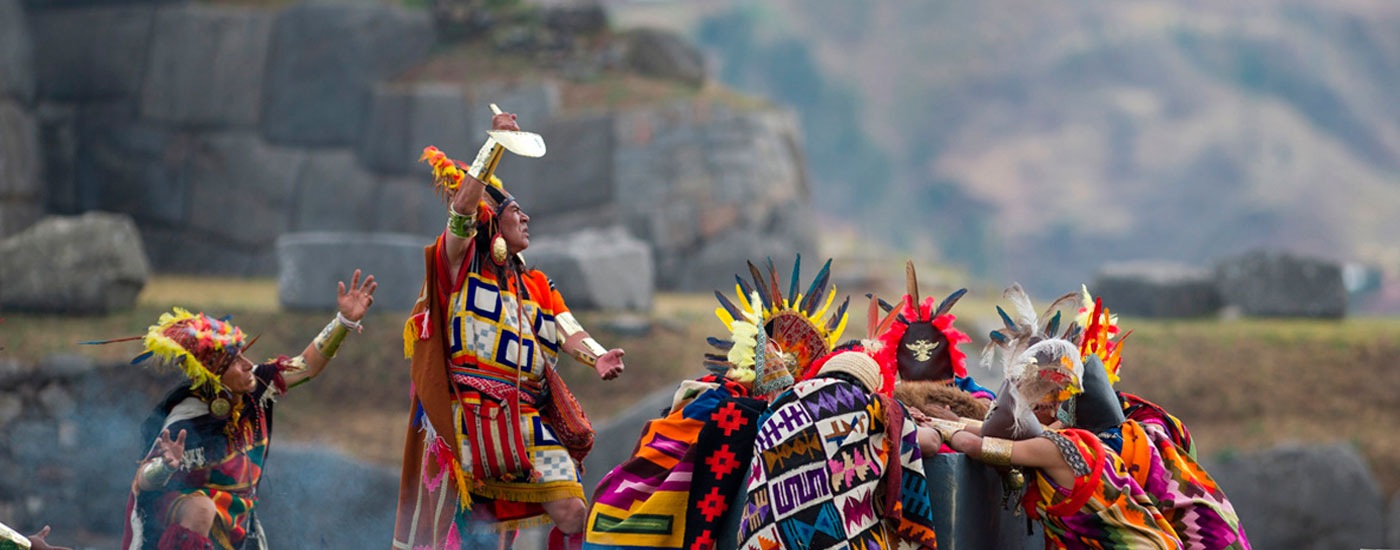
- Festivals: Such as Inti Raymi, celebrating the sun and renewal.
Syncretism with Christianity
After Spanish colonization, Andean religion blended with Catholicism. Many Indigenous communities honor Pachamama alongside Christian saints, creating a syncretic religious practice still visible across Peru, Bolivia, and Ecuador.
Contemporary Relevance – Andean Religion.
Today, Andean religion remains a living tradition, especially in rural Andean communities. It also plays a growing role in cultural identity, ecological awareness, and Indigenous rights movements.
If you require this information adapted for a school assignment, presentation, or cultural guide, specify the format and depth required.