
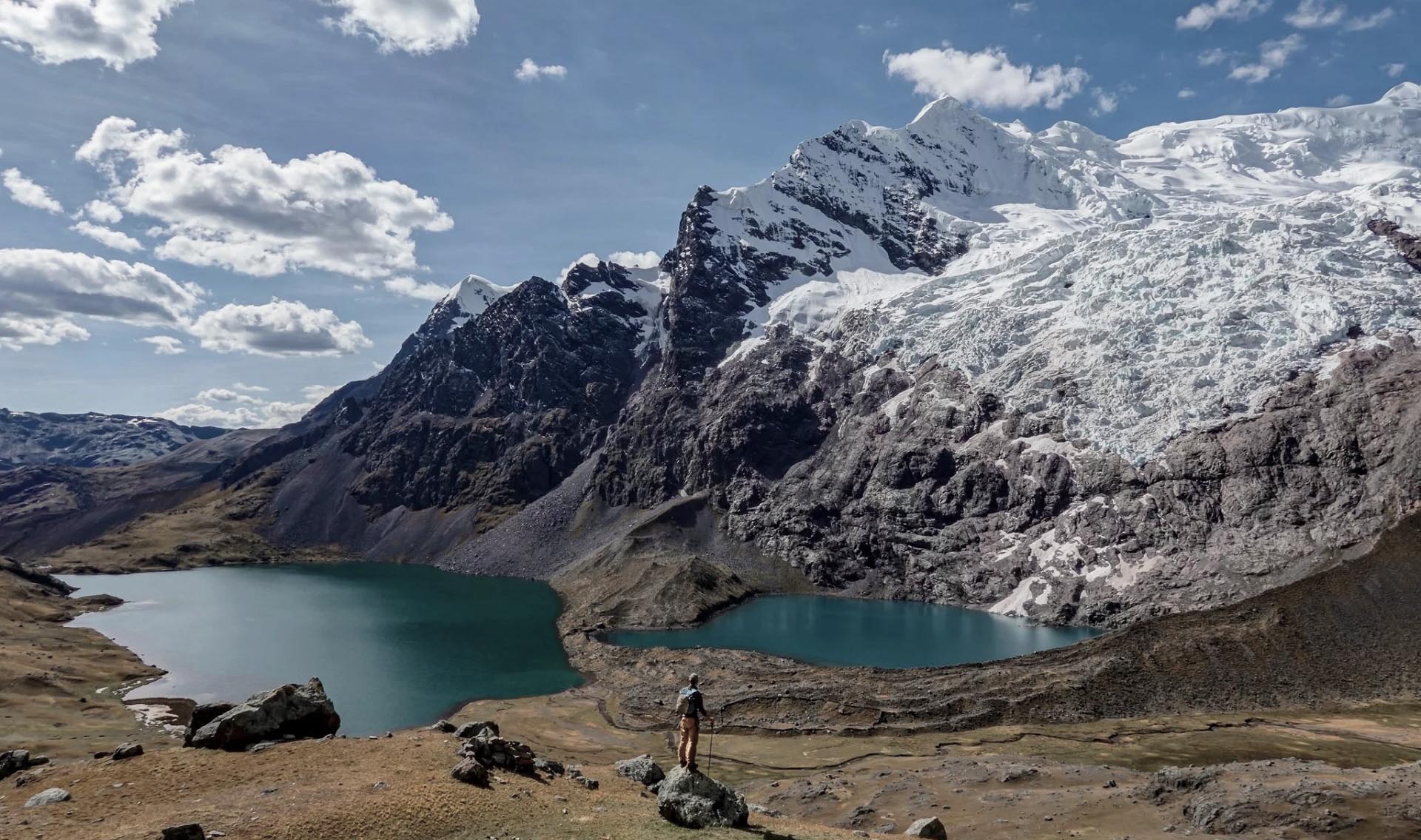
Ausangate Hike:
The Apu Ausangate Hike is a sacred mountain, one of the most important in the Cusco region for Andean tradition.
Sacred Mountain (Apu)
- In Andean cosmology, Ausangate is one of the most powerful Apus (sacred mountain spirits).
- It is believed to be a protector of the surrounding communities, providing water and fertility to the land.
- Local Quechua people still perform offerings (called pagos a la tierra or “payments to the earth”) to honor the mountain and Pachamama (Mother Earth).
Pre-Columbian Era
- The mountain and surrounding valleys were used by the Inca and pre-Inca societies for herding alpacas and llamas.
- The glaciers were seen as sources of life, feeding rivers that supported agriculture in the high Andes.
Qoyllur Rit’i Festival
- One of the most important Andean pilgrimages, the Qoyllur Rit’i (Quechua for “Snow Star”) festival, is linked to Ausangate.
- Takes place annually before Corpus Christi, near Sinakara Valley at the base of the mountain.
- Pilgrims from all over the Andes gather, mixing Catholic traditions with indigenous Andean rituals.
- Once, pilgrims climbed onto the glacier to cut out blocks of ice, believed to have healing powers. Due to climate change and safety concerns, this practice has mostly stopped.
Modern Role
- Today, Ausangate Hike remains a site of spiritual devotion and cultural continuity, as well as a draw for trekkers and climbers.
- The mountain is also central to discussions about climate change, since its glaciers are retreating rapidly, threatening local water supplies.
Ausangate Hike Overview
- Location: Part of the Vilcanota mountain range, ~100 km southeast of Cusco, Peru.
- Height: 6,384 m (20,945 ft), the fifth-highest peak in Peru.
- Cultural Significance: Sacred in Andean cosmology. Still a pilgrimage site for the Qoyllur Rit’i festival, where thousands gather each year.
- Trek: Known for the Ausangate Circuit (4–6 days, high-altitude trek) and side trips to Rainbow Mountain (Vinicunca).
- Landscape: Glaciers, turquoise lakes, red-and-green mineral mountains, alpaca herds, and remote Quechua-speaking communities.
- Difficulty: Challenging. Multiple passes above 5,000 m, thin air, and freezing nights. Not technical climbing, but serious altitude trekking.
- Why Go: It’s less crowded than the Inca Trail, offers raw Andean wilderness, and gives a real connection to traditional highland life.
Ausangate Hike Highlights
- Rainbow Mountain (Vinicunca): Often included as a side trek
- Glaciers & Lakes: Turquoise alpine lakes like Ausangatecocha
- Remote Villages: Traditional Andean communities with alpaca herders
- Wildlife: Llamas, alpacas, vizcachas, and condors
- Scenery: Snow-capped peaks, red valleys, colorful mineral-rich mountains
Typical Itinerary Ausangate Hike (5 Days)
Day 1: Cusco → Tinqui → Upis (hot springs camp)
Day 2: Upis → Arapa Pass → Ausangatecocha (camp by the lake)
Day 3: Ausangatecocha → Palomani Pass (highest point ~5,200 m) → Huchuy Phinaya
Day 4: Huchuy Phinaya → Jampa Pass → Pacchanta (hot springs)
Day 5: Pacchanta → Tinqui → Return to Cusco
(Many treks can be shortened or extended depending on pace and inclusion of Rainbow Mountain.)
Practical Info
- Best Season: Dry season (May–Sept). Clear skies, cold nights.
- Guided vs. Independent: Most go with a guide due to remoteness and altitude; independent trekking possible for experienced hikers.
- Permits: No Inca Trail–style permit needed, but entry fees apply.
- Accommodation: Camping (supported treks bring horses/mules, cooks, gear).
- Altitude: Serious risk of altitude sickness; acclimatize in Cusco for 2–3 days.
What You’ll Need for the Ausangate Hike.
- Warm layers (nights below freezing)
- Sleeping bag (rated at least -10°C)
- Trekking poles
- High-calorie snacks
- Water purification system
- Diamox or similar (consult doctor for altitude medication)